Prior authorization manager
Medical director
Clinical appeals specialist
Prescribing physician
Payer relations coordinator
Patient advocate

This process is used when a prior authorization request has been denied by a payer and the provider or patient believes the denial should be overturned based on medical necessity, clinical evidence, or payer policy interpretation. It applies when the denial must be reviewed for appeal merit, additional clinical documentation must be gathered, and the appeal must be submitted within the payer’s filing deadline. It is common when clinical appeals specialists, prescribing providers, and the payer’s medical director must coordinate on clinical justification and peer-to-peer review. Ideal for physician practices, hospitals, specialty pharmacies, and any healthcare organization managing high volumes of prior authorization denials.
The appeal process typically involves clinical appeals specialists who evaluate the denial and prepare the appeal, prescribing providers who supply additional clinical justification and participate in peer-to-peer reviews, medical directors who may support complex or high-value appeals, payer medical reviewers who evaluate the appeal, and the patient who is informed of the process and outcome.
Higher appeal overturn rates because appeals are prepared with targeted clinical evidence that directly addresses the payer’s denial reason. Timely appeal filing by tracking denial dates against payer-specific appeal deadlines so no recoverable denial expires unfiled. Reduced patient care disruption because the appeal process moves quickly, minimizing the time patients wait for authorized services. Provider engagement at the right moment by routing peer-to-peer review requests to the prescriber with the clinical context they need. Complete appeal documentation that supports further escalation, external review, or regulatory complaint if the internal appeal is unsuccessful.
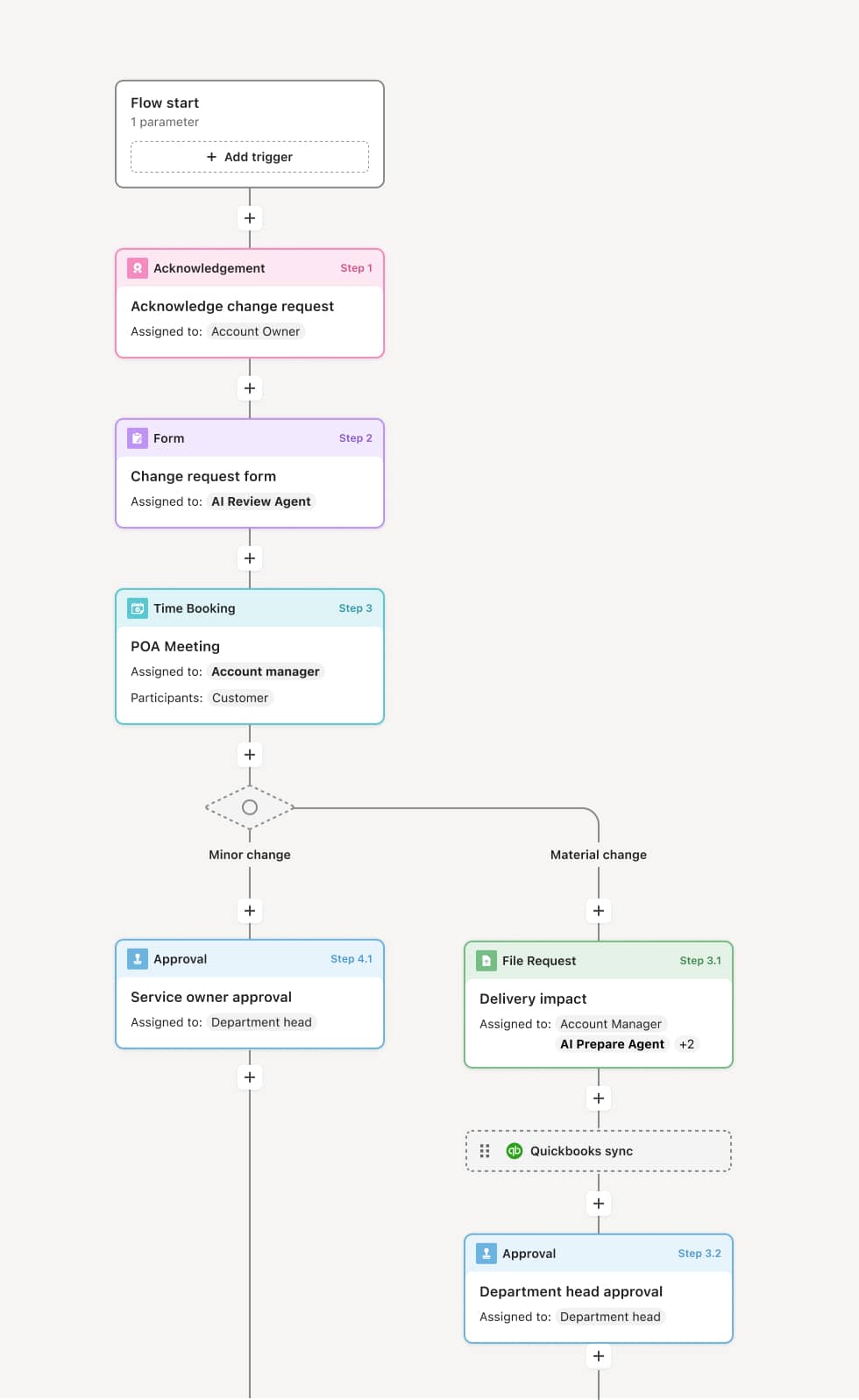
Your version of this process may vary based on roles, systems, data, and approval paths. Moxo’s flow builder can be configured with AI agents, conditional branching, dynamic data references, and sophisticated logic to match how your organization runs this workflow. The steps below illustrate one example.
Denial review and appeal merit assessment
The process begins when a prior authorization denial is received. The clinical appeals specialist reviews the denial reason, the original authorization request, and the clinical documentation that was submitted. The specialist assesses whether the denial is based on insufficient documentation, a clinical criteria mismatch, or a policy interpretation that can be challenged. An AI Agent can assist by comparing the denial reason against the payer’s published clinical criteria and identifying specific gaps that can be addressed.
Additional clinical evidence gathering
If the appeal has merit, the specialist works with the prescribing provider and clinical team to gather additional documentation including updated clinical notes, specialist opinions, relevant medical literature, and additional diagnostic results that strengthen the medical necessity argument.
Appeal preparation and submission
The appeal letter is prepared, clearly addressing the payer’s denial reason, presenting additional clinical evidence, citing applicable clinical guidelines, and requesting overturn. The appeal package is submitted through the payer’s designated channel within the filing deadline. An AI Agent may verify the package meets the payer’s specific submission requirements.
Peer-to-peer review coordination
If the payer offers or requires a peer-to-peer review, the prescribing provider is scheduled to speak with the payer’s medical director. The provider is prepared with the clinical case summary, key talking points, and the specific criteria used to deny the request.
Payer response and determination tracking
The team monitors the payer’s appeal review timeline and follows up if the response is overdue. When the determination is received, the outcome is recorded and communicated to the clinical team and the patient.
Escalation or resolution
If the internal appeal is denied, the team evaluates whether to pursue additional levels of appeal, external independent review, or a regulatory complaint. If approved, the authorization is activated and the service proceeds. The complete appeal record is preserved.
This process commonly relies on inputs such as the denial notice, original authorization request, clinical documentation, payer clinical criteria, clinical guidelines, and peer-to-peer review notes. It may be triggered by a denial notification from the payer. Connected systems often include EHR platforms like Epic or Cerner, prior authorization and appeals tracking systems, payer portals, and clinical guideline databases.
Key decision points include whether the denial has merit for appeal based on the denial reason and available clinical evidence, what additional documentation is needed to strengthen the medical necessity argument, whether a peer-to-peer review should be pursued, and whether a denied appeal warrants escalation to external review or regulatory channels.
Appeal filing deadline missed because the denial was not reviewed promptly or the deadline was not tracked. Appeal submitted without addressing the specific denial reason, resulting in the denial being upheld on the same basis. Provider unavailable for peer-to-peer review when the scheduling window is narrow. Insufficient clinical evidence submitted because additional records or guidelines were not gathered before filing. Appeal outcomes not tracked, allowing further escalation options to expire.
Orchestrates the appeal process from denial review through resolution across appeals specialists, providers, payers, and patients in a single coordinated flow.
Tracks appeal filing deadlines from the moment the denial is received, ensuring no recoverable denial expires unfiled.
AI Agents analyze denial reasons against payer criteria and suggest specific evidence gaps to address in the appeal.
Coordinates peer-to-peer review scheduling by engaging the prescribing provider with the clinical case summary within the workflow.
Connects to EHR, authorization, and payer systems like Epic, Cerner, and payer portals so clinical data and appeal submissions are managed in context.
Preserves the complete appeal record including denial analysis, additional evidence, appeal submission, peer-to-peer outcomes, and final determination for compliance and trend analysis.