
General counsel
Legal operations manager
Finance director
Chief financial officer
Risk manager
Claims manager

This process is used when the organization is considering a financial settlement to resolve a dispute, claim, lawsuit, or regulatory matter and the proposed terms require formal review and authorization. It applies when settlement amounts exceed predefined thresholds, when the terms involve non-monetary concessions or future obligations, or when legal, financial, and reputational risk must be weighed before commitment. It is common when legal counsel, finance, insurance, and executive leadership must coordinate their assessments and approvals. Ideal for financial services, insurance, healthcare, manufacturing, professional services, and any organization that regularly manages disputes or claims.
The settlement approval process typically involves legal counsel who assesses litigation risk and recommends settlement terms, claims or dispute managers who provide case context and history, finance reviewers who evaluate the financial impact including reserves and budget implications, risk managers who assess broader organizational exposure, and executive leaders or the board who authorize settlements above defined thresholds.
Faster settlement resolution by routing proposals to the correct authority based on amount and risk profile, avoiding delays from unclear approval chains. Informed settlement decisions because every proposal reaches approvers with complete case context, financial impact analysis, and legal risk assessment. Protected organizational exposure through consistent evaluation of settlement terms against risk thresholds and precedent. Documented authorization so every settlement has a clear record of who approved, under what conditions, and with what financial impact. Reduced litigation costs by resolving settlements efficiently before escalating legal fees and exposure accumulate.
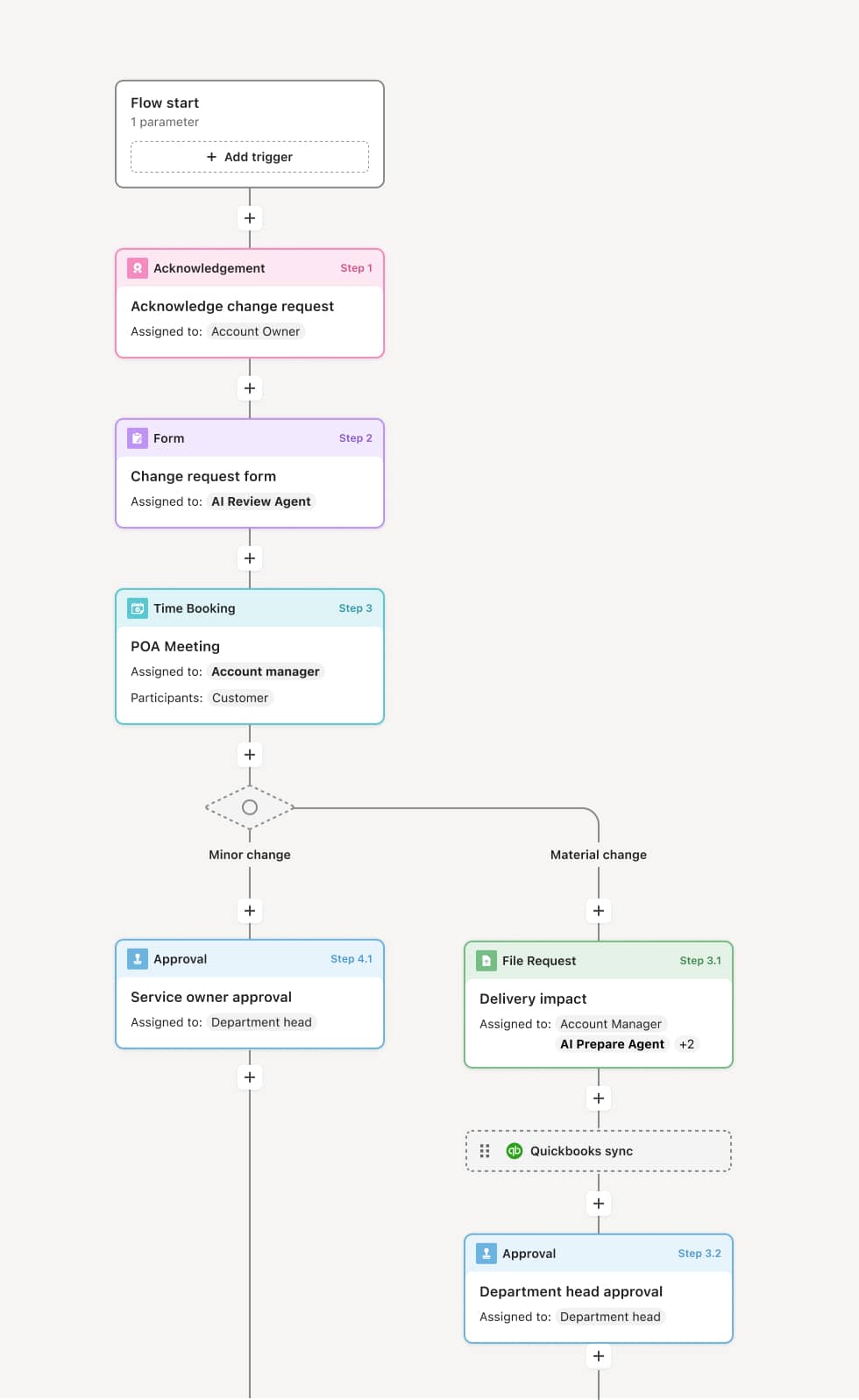
Your version of this process may vary based on roles, systems, data, and approval paths. Moxo’s flow builder can be configured with AI agents, conditional branching, dynamic data references, and sophisticated logic to match how your organization runs this workflow. The steps below illustrate one example.
Settlement proposal submission
The process begins when legal counsel or a claims manager submits a settlement proposal for review. The submission includes the case summary, proposed settlement amount, non-monetary terms if applicable, legal risk assessment, and the rationale for settlement versus continued litigation. An AI Agent can assist by assembling the case timeline, prior settlement discussions, and relevant precedent into a summary for reviewers.
Financial impact assessment
Finance reviews the proposed settlement against current reserves, budget allocations, and the broader financial impact. This includes assessing whether reserves are adequate, whether the settlement affects reported liabilities, and how the payment timing aligns with cash flow. If the financial impact is material, the assessment is flagged for executive review.
Risk and exposure evaluation
The risk manager or legal team evaluates the broader organizational exposure, including reputational risk, precedent-setting implications, and the likelihood of similar future claims. If the settlement involves regulatory matters, compliance may provide additional input. An AI Agent may surface similar past settlements to provide context for the decision.
Approval decision
The settlement is routed to the appropriate approver based on its amount and risk profile. Settlements within predefined limits may be approved by legal operations or finance leadership. Higher-value or precedent-setting settlements are escalated to executive leadership, the CFO, or the board. The approver authorizes the settlement, requests revised terms, or directs continued litigation.
Execution and payment processing
Upon approval, the settlement terms are formalized, agreements are executed, and payment is initiated through finance. If the settlement requires mutual releases, confidentiality provisions, or compliance obligations, those are documented and tracked within the workflow.
Closure and record preservation
The settlement record — including case history, risk assessment, financial analysis, approval decision, executed agreement, and payment confirmation — is preserved. Stakeholders are notified of closure, and the case is closed in connected legal and financial systems.
This process commonly relies on inputs such as the case file or claim record, legal risk assessment, proposed settlement terms, financial reserves data, and prior settlement history. It may be triggered by a negotiation milestone, a legal recommendation, or a court-imposed deadline. Connected systems often include legal matter management platforms like Clio or LegalTracker, ERP systems like NetSuite or SAP for financial data, and claims management systems for case history.
Key decision points include whether the proposed settlement amount falls within predefined authority limits or requires executive escalation, whether the financial impact is material enough to affect reserves or reported liabilities, whether non-monetary terms or precedent implications change the risk profile, and whether to approve the settlement or direct continued litigation based on the combined risk and financial assessment.
Settlement proposals submitted without complete case context, forcing approvers to request additional information and delaying resolution. Inadequate financial analysis when reserves are not assessed against the proposed settlement, leading to unexpected budget impact. Unclear authority thresholds that cause confusion over who can approve settlements at different levels, stalling decisions. Missed execution deadlines when approved settlements are not formalized and paid within court or counterparty timelines. Fragmented settlement records spread across legal, finance, and claims systems, making it difficult to analyze trends or demonstrate governance.
Orchestrates settlement review across legal, finance, risk, and executive leadership in a single structured flow that respects authority levels and urgency.
Routes proposals based on settlement amount and risk classification so routine settlements are resolved quickly while material ones reach the right decision-makers.
AI Agents assemble case context by pulling case history, financial reserves data, and prior settlement precedent into a ready-to-review package.
Tracks execution and payment within the workflow so approved settlements are formalized and paid within required timelines.
Connects to legal matter management and ERP systems like Clio, LegalTracker, and NetSuite so settlement data stays synchronized across platforms.
Preserves the complete settlement record including risk assessments, approvals, executed agreements, and payment confirmations for governance and trend analysis.