Creative director
Marketing operations manager
Brand manager
Legal counsel
Content production lead
VP of marketing

This process is used when a video asset requires formal review and approval before it can be published, distributed, or presented to external audiences. It applies when the video includes brand messaging, product claims, customer testimonials, talent appearances, licensed music or footage, or regulated disclosures that require cross-functional validation. It is common when creative, brand, legal, compliance, and executive stakeholders must each review different aspects of the production before final release. Ideal for marketing agencies, media companies, healthcare, financial services, technology, and any organization producing video content at scale.
The video production approval process typically involves the production team or content creator who submits the video for review, creative directors who assess production quality and creative alignment, brand managers who validate messaging and visual identity, legal counsel who reviews claims, disclosures, talent releases, and licensing, and executive stakeholders or client contacts who provide final sign-off on high-visibility content.
Consistent brand and messaging quality across all published video content, reducing the risk of off-brand or inaccurate assets reaching audiences. Faster production turnaround by routing reviews to the right stakeholders based on content type and risk level rather than requiring every video to pass through every reviewer. Reduced legal and compliance risk through mandatory review of claims, disclosures, talent agreements, and licensing before publication. Fewer post-publication corrections because quality, messaging, and compliance issues are caught during the approval cycle. Clear release authorization so every published video has documented approval from the required stakeholders.
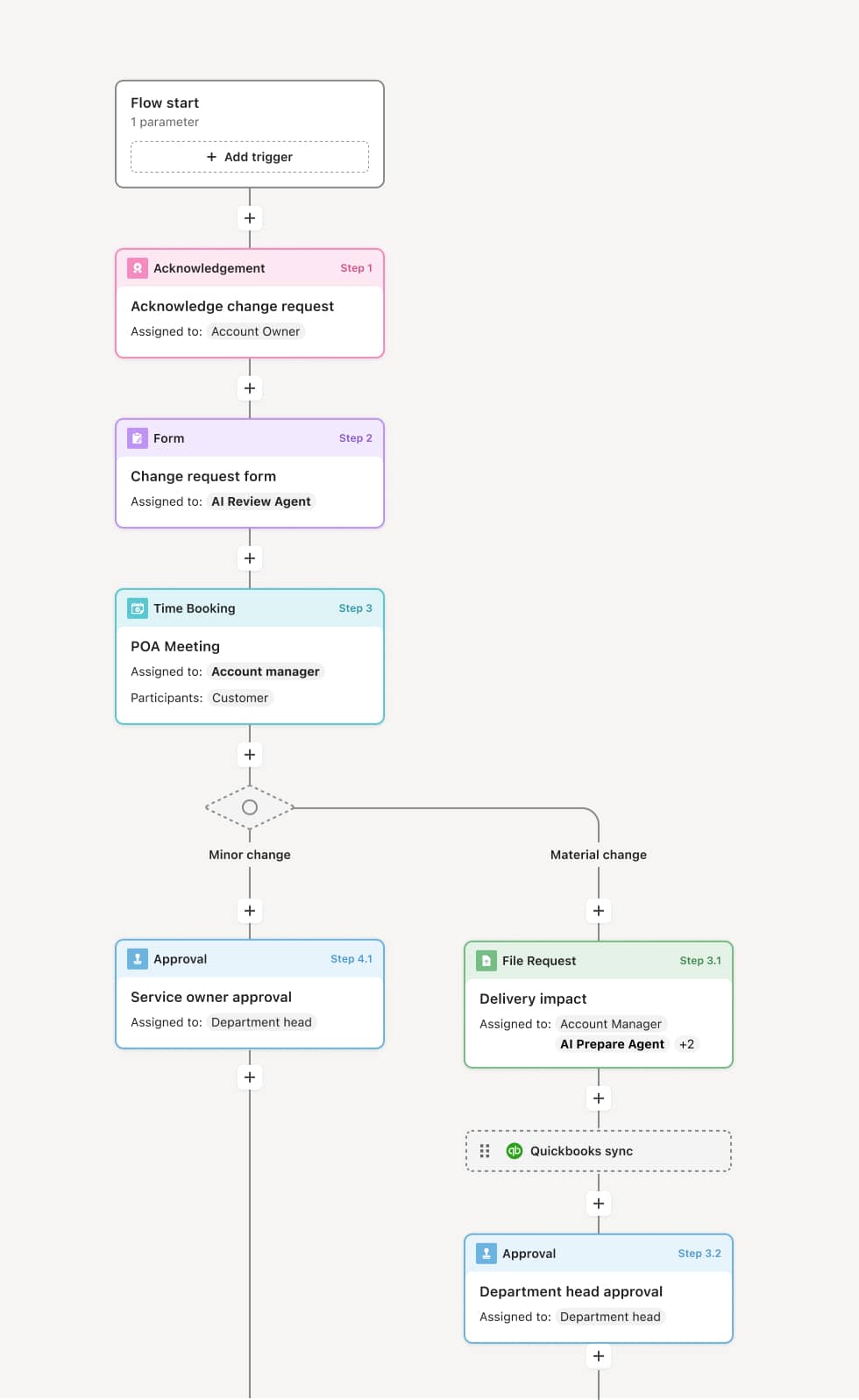
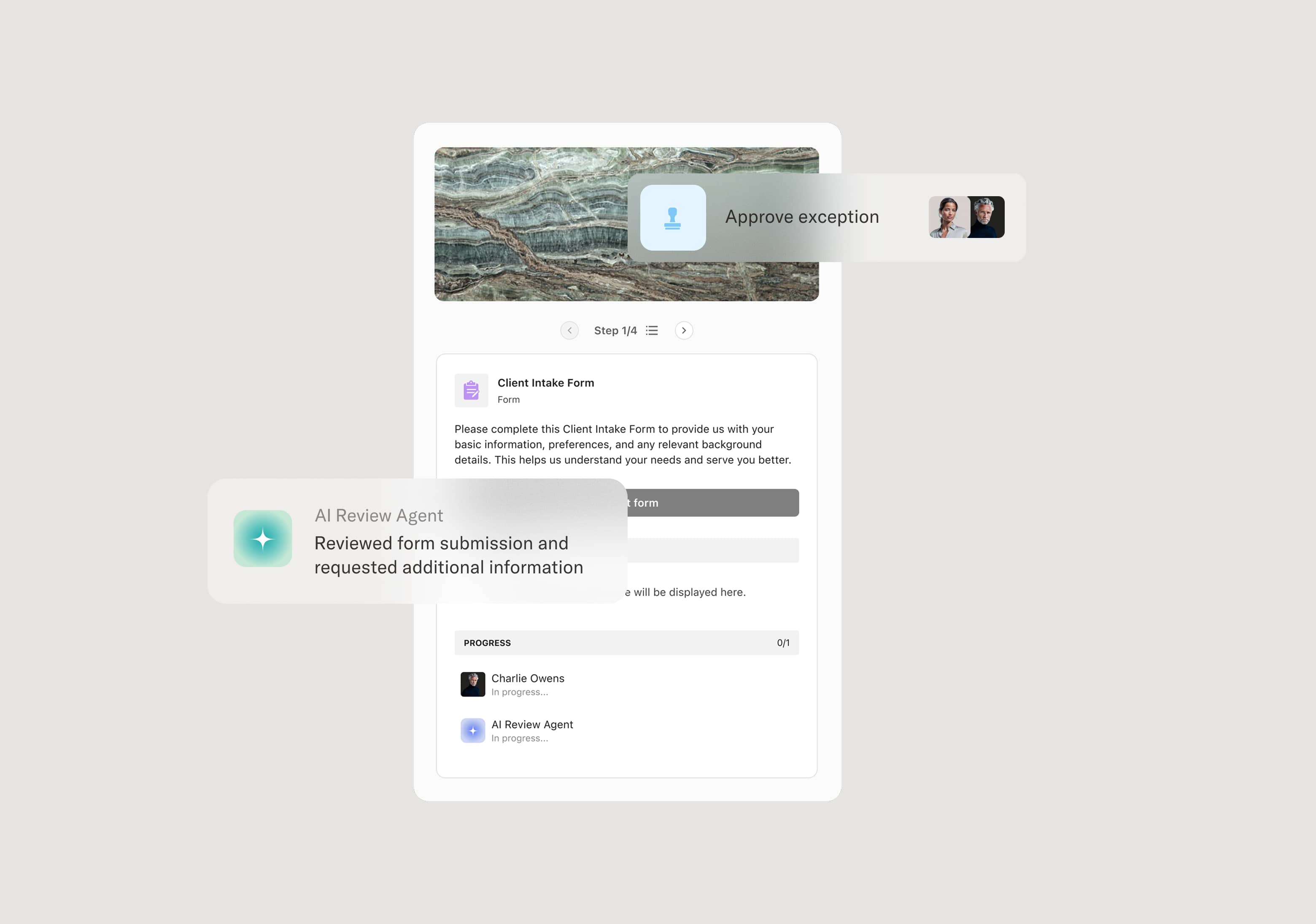
Your version of this process may vary based on roles, systems, data, and approval paths. Moxo’s flow builder can be configured with AI agents, conditional branching, dynamic data references, and sophisticated logic to match how your organization runs this workflow. The steps below illustrate one example.
Video submission and briefing
The process begins when the production team submits a video for review along with a creative brief, intended distribution channels, target audience, and any notes on elements that may require legal or compliance review — such as talent appearances, product claims, customer testimonials, or licensed assets. An AI Agent can assist by flagging content elements that typically trigger legal or compliance review based on the brief.
Creative and quality review
The creative director or senior producer reviews the video for production quality, storytelling coherence, pacing, and alignment with the original creative brief. If the video does not meet creative standards, it is returned to the production team with specific revision notes.
Brand and messaging review
The brand manager reviews the video for visual identity compliance, messaging alignment, tone consistency, and adherence to brand guidelines. If messaging or branding issues are identified, the video is returned with feedback. This review may proceed in parallel with the creative review.
Legal and compliance review
Legal reviews the video for claims accuracy, required disclosures, talent release documentation, music and footage licensing, and any regulatory requirements specific to the content or distribution channel. An AI Agent may surface applicable disclosure requirements based on the content type and target audience. If legal issues are found, specific guidance is provided for revision.
Stakeholder or client approval
For high-visibility content, executive stakeholders or client contacts review the final version and provide sign-off. If revisions are requested at this stage, the video routes back to the appropriate review phase.
Final approval and release authorization
Once all required reviews are complete, the video is approved for distribution. The approved version, along with all review notes, revision history, and approvals, is recorded and the video is released to the designated channels.
Distribution and record-keeping
The approved video is published or distributed according to the plan. All review comments, approvals, and version history are preserved for future reference, re-use, and audit.
This process commonly relies on inputs such as the video file, creative brief, brand guidelines, talent release forms, music and footage licenses, and disclosure requirements. It may be triggered by a production milestone, a campaign deadline, or a content calendar event. Connected systems often include digital asset management platforms, project management tools like Asana or Monday.com, and content distribution platforms for scheduling and publishing.
Key decision points include whether the video meets creative quality and brief alignment standards, whether brand messaging and visual identity are consistent with guidelines, whether legal requirements such as claims, disclosures, talent releases, and licensing are satisfied, and whether executive or client sign-off is required before release.
Videos submitted without required legal documentation such as talent releases or music licenses, stalling the review cycle. Brand feedback and creative feedback conflicting, causing multiple revision rounds that extend the timeline. Legal issues discovered late because compliance-triggering content was not identified at submission. Version confusion when revisions are made outside the approval workflow and the wrong version is distributed. Post-publication corrections that require pulling content from live channels, damaging brand credibility.
Orchestrates video review across creative, brand, legal, and executive stakeholders in a single flow that keeps production timelines on track.
Routes videos to the right reviewers based on content type and risk level so standard content moves quickly while regulated or high-visibility videos receive appropriate scrutiny.
AI Agents flag compliance-triggering content elements at submission — such as claims, testimonials, or licensed assets — to ensure legal review is engaged early.
Supports parallel creative, brand, and legal reviews so assessment tracks proceed concurrently rather than sequentially.
Connects to digital asset management and project management tools so video files, review notes, and approvals are tracked alongside the broader production workflow.
Preserves the complete approval record for every video, including review comments, revision history, legal sign-offs, and release authorization for governance and re-use.