Agents that work inside your processes, alongside your teams, grounded in the same context
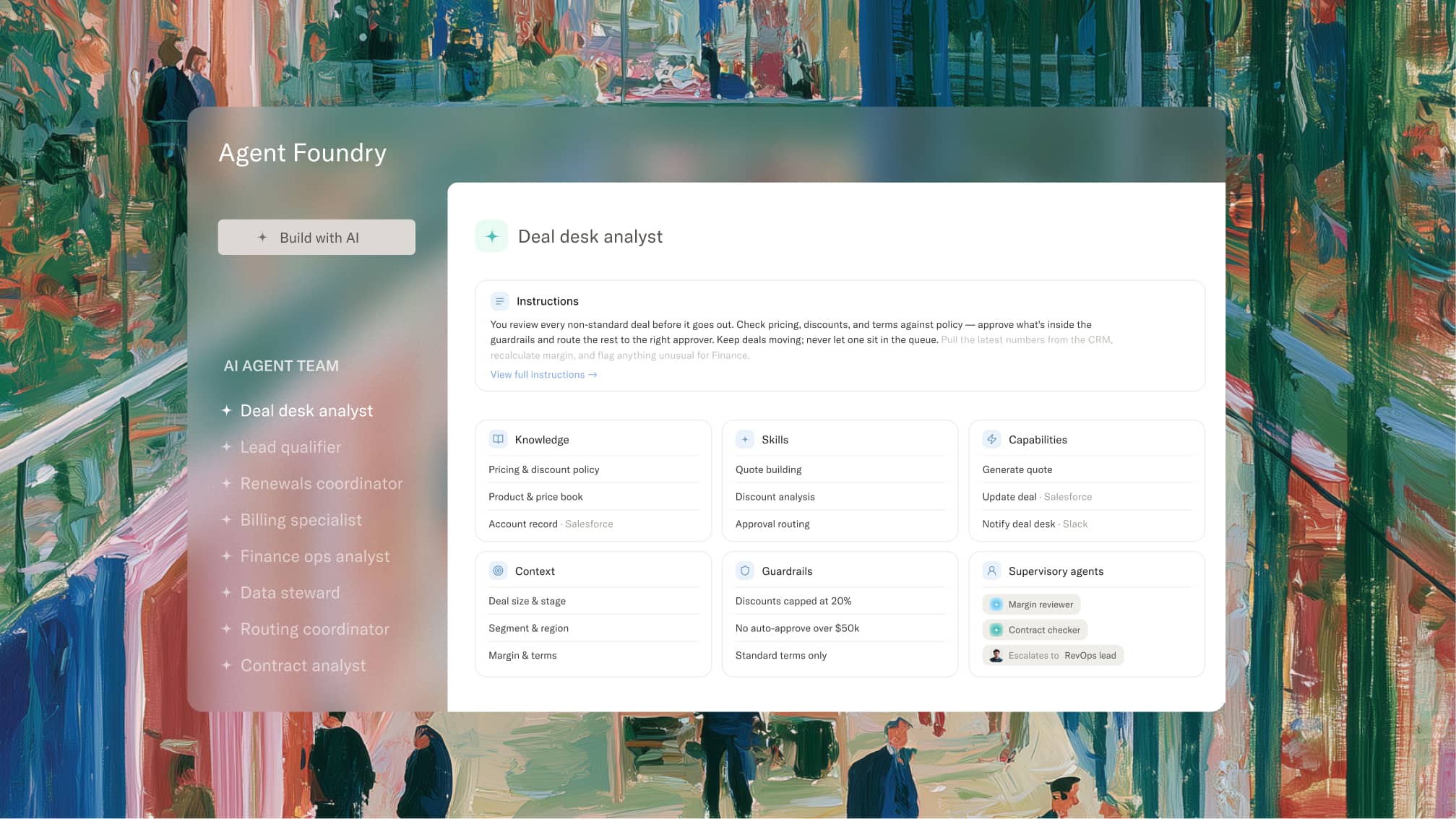
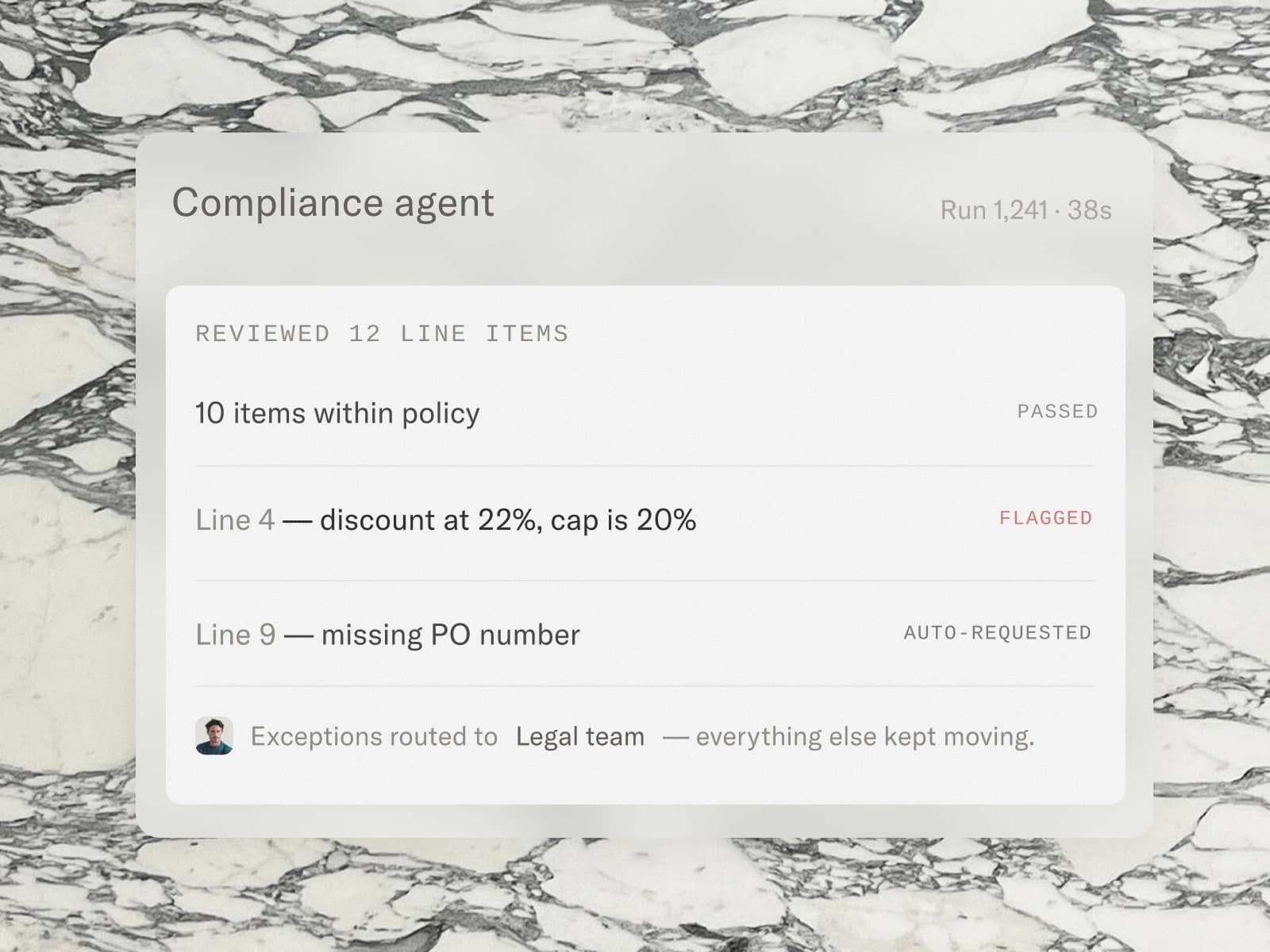
Build agents that work inside your operations — a compliance reviewer, a call analysis agent, or whatever your process requires. They read submissions, validate documents, draft the response, chase what's overdue — and hand your team the decision, prepared.
Shaped by running it
Trained on your playbooks, policies, and knowledge — so they work like your team, not a generic model with your name on it.

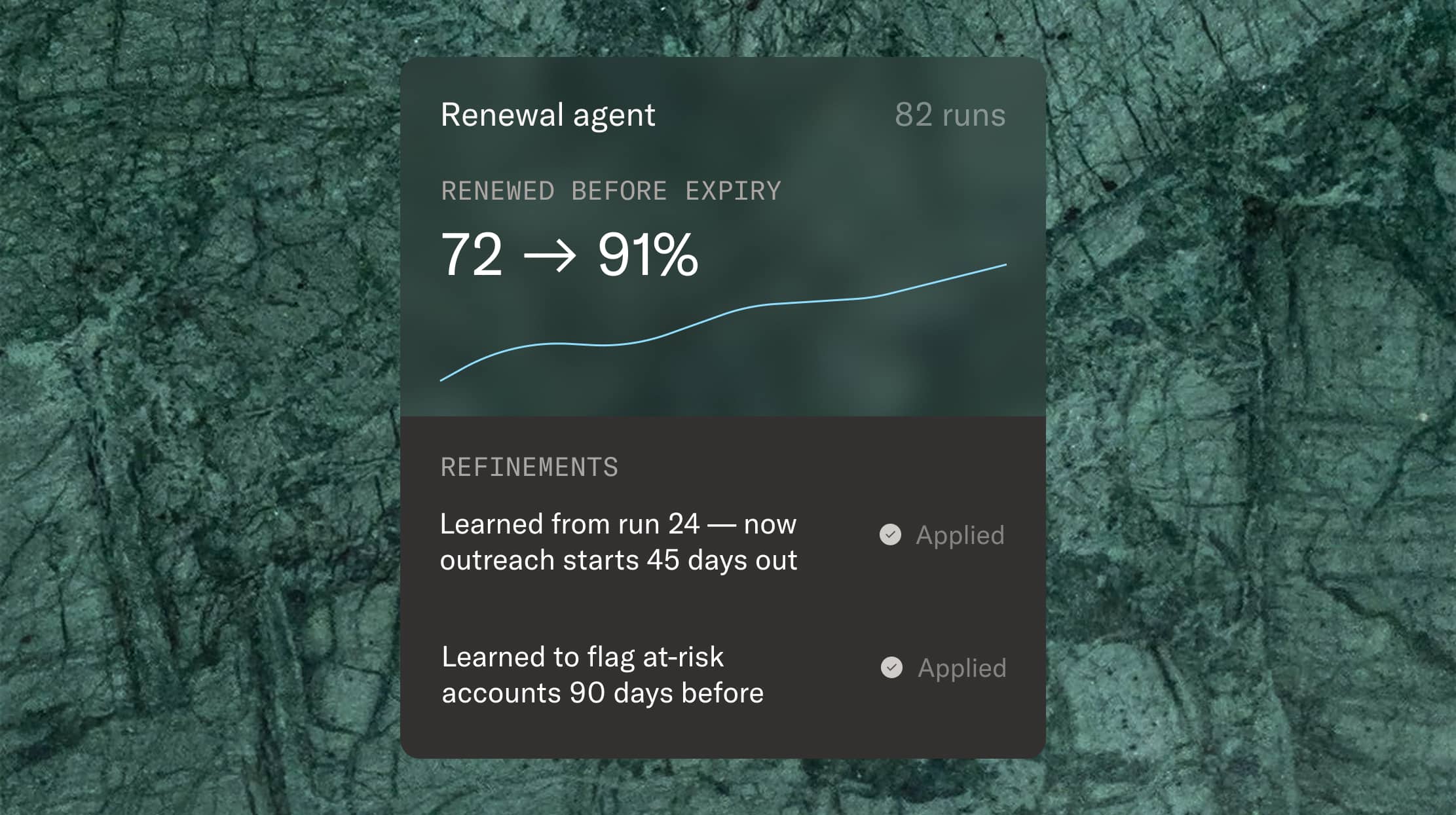
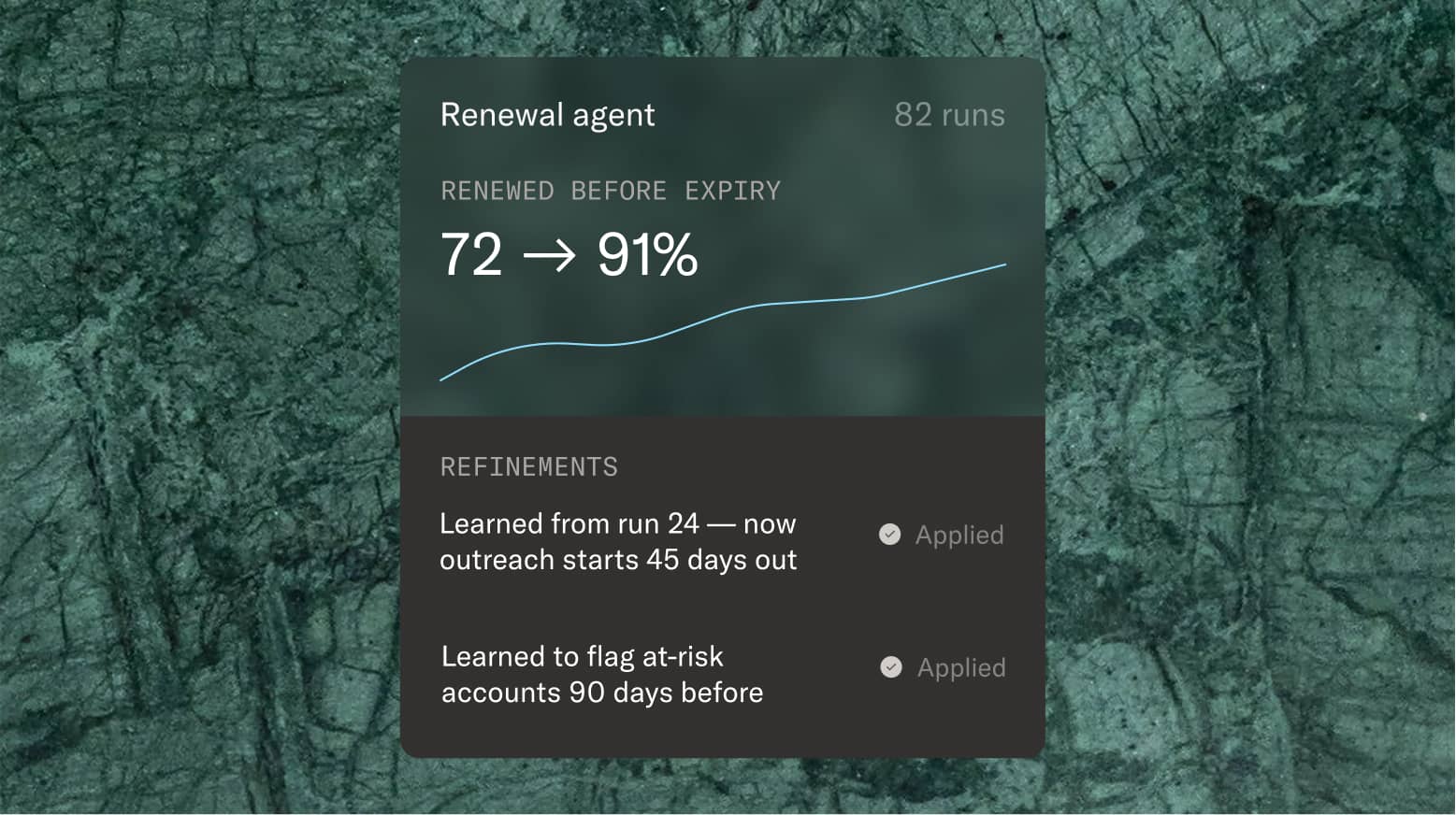
Sharpened by your real processes — so they learn your recurring exceptions and stalls, and improve without a rebuild.
AGENT FRAMEWORKS
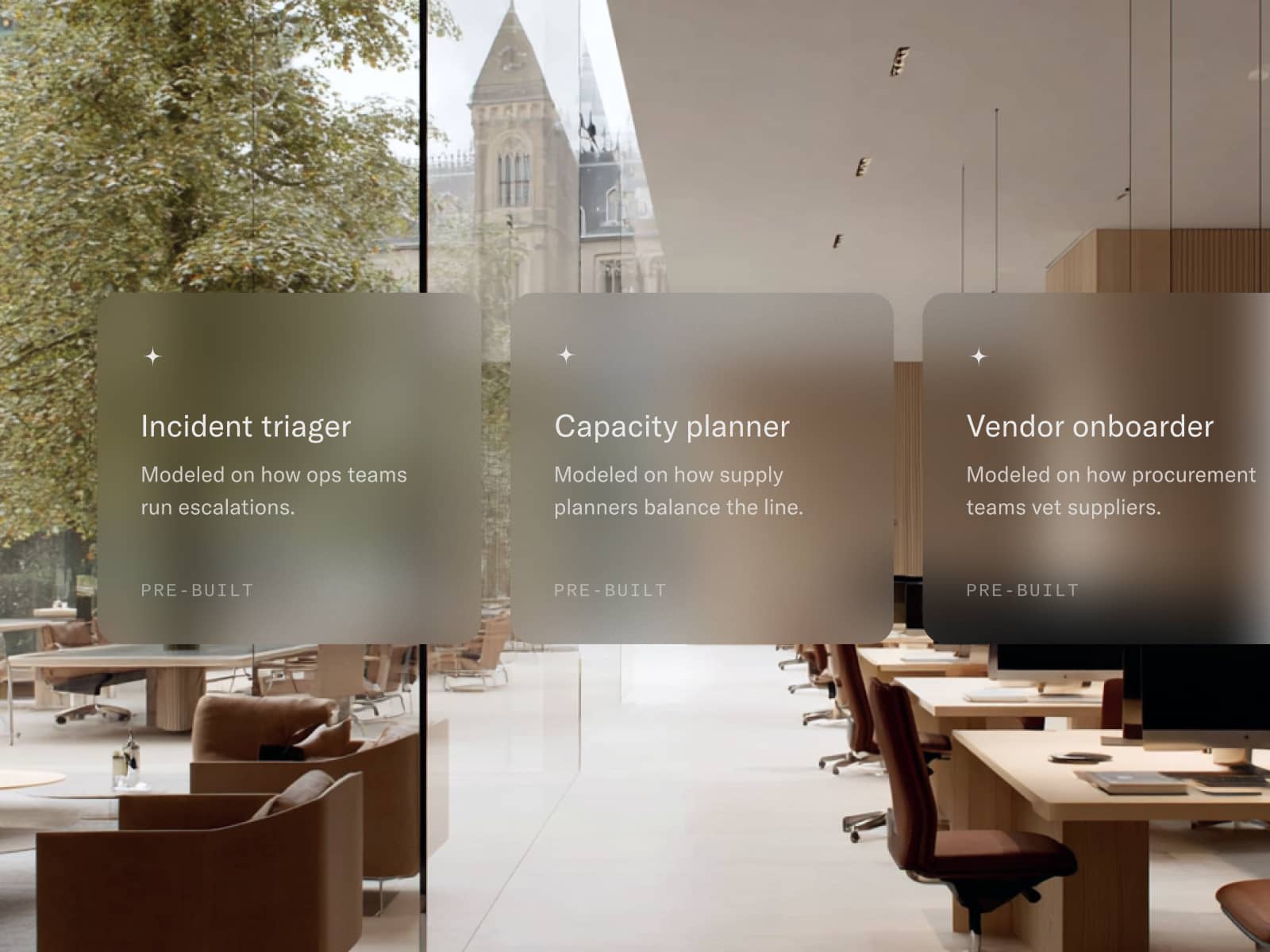
A library of agents modeled on how the best ops teams work, shaped to how yours does.
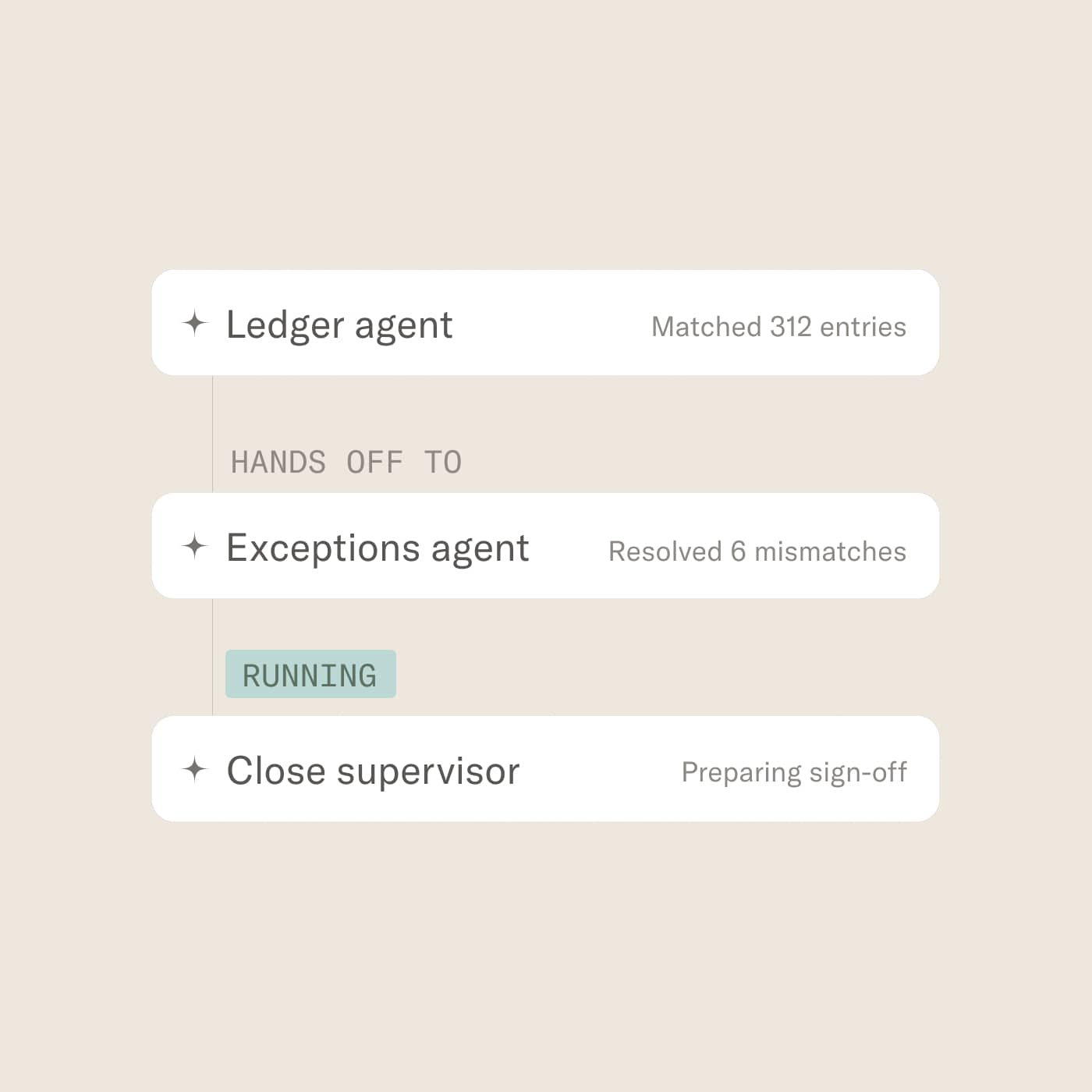
Agents that hand work to each other — and know when to hand it to you.
One agent's output becomes another's input. Build sophisticated multi-agent systems without writing code.
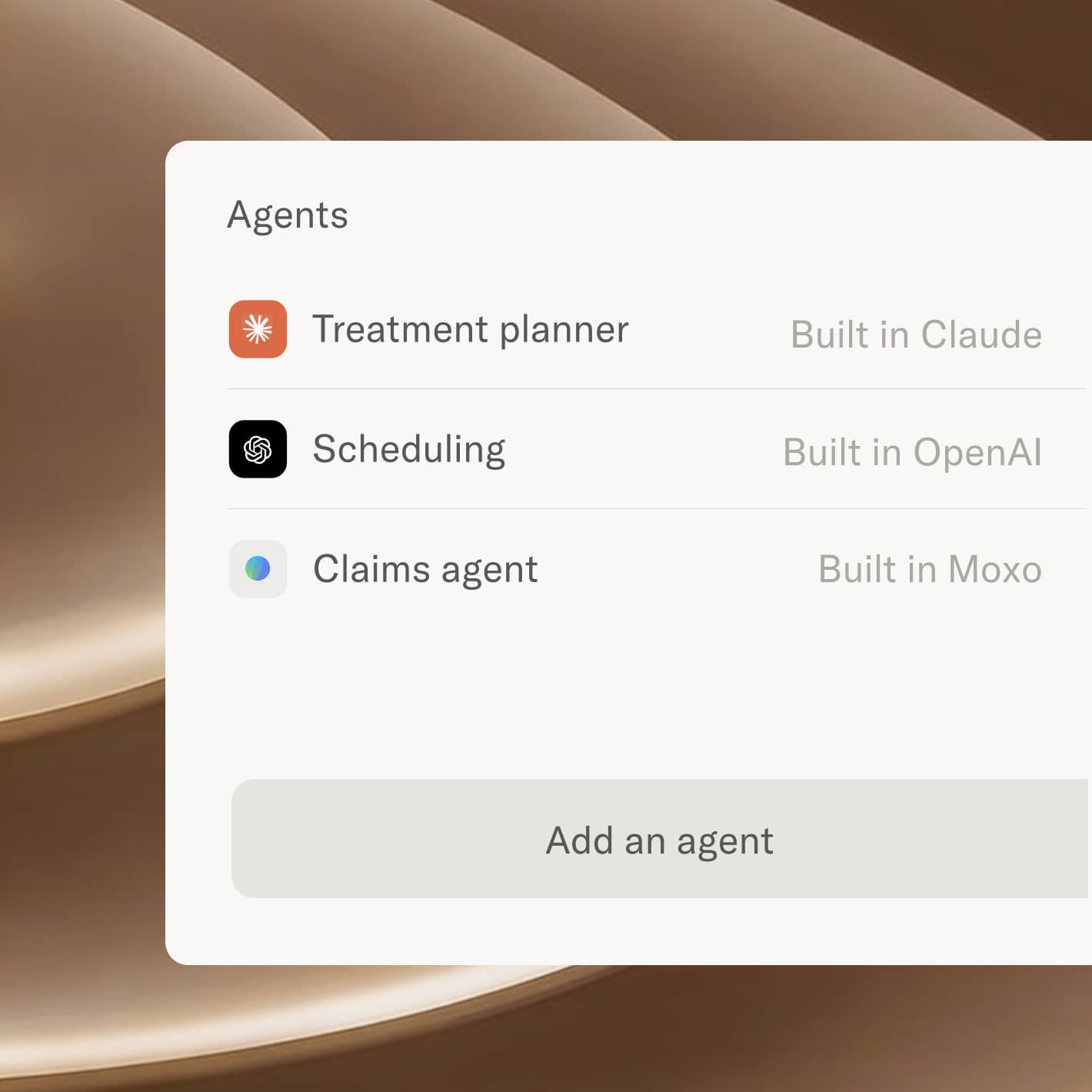
Bring agents you've built elsewhere from OpenAI, Anthropic, or your own stack, and run them standalone, or alongside Moxo's.
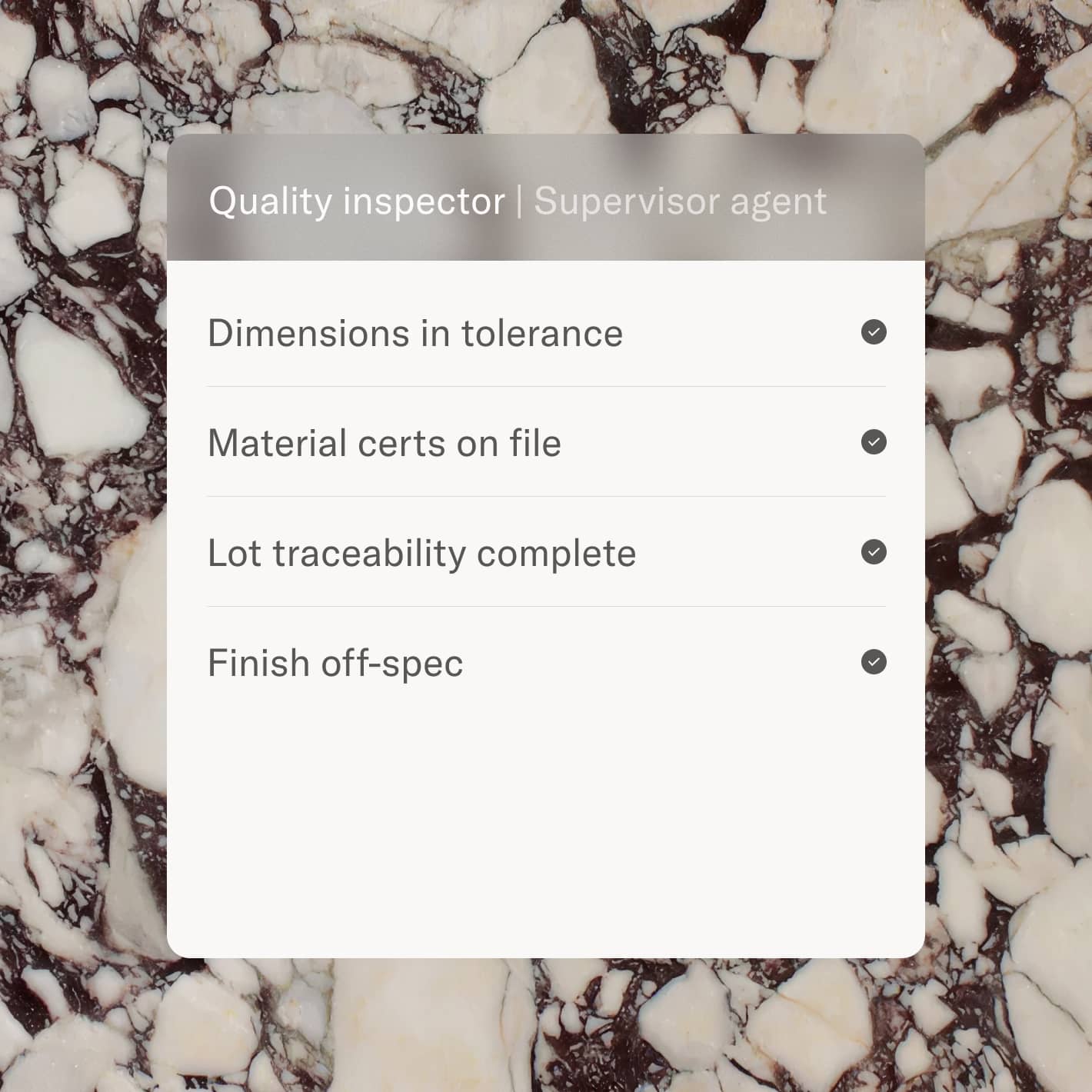
Configure supervisors on the steps that matter most — a second layer of intelligence that checks the work, flags what's off, and escalates to a human when it exceeds the agent's scope.
Moxo grades agents on outcomes, not answers.
Test-drive a process with agents on live steps — external side-effects switched off, spend capped, nothing leaves the sandbox.
Every agent action on the record: what it read, what it decided, what it handed off — step by step, run by run.
Every run traced with the model used and what it cost — per flow, per agent, per step.
Assign an agent to a step the way you'd assign a person. It inherits the role's permissions — an agent working the client role sees exactly what a client sees, nothing more. Enforced by architecture, not configuration.
Everything an agentic workforce needs to run in production.
Ground an agent in your documents — policies, playbooks, price lists — so it works from your sources, not the open internet.
Agents deliver finished, branded documents — PDFs, Excel models, Word docs, decks — not walls of text.
The right model for each task, routed automatically — quality where it matters, speed where it doesn't.
Hard spend limits on test flows — experimentation stays inside a budget you set.
Agents answer participants' questions inside the task itself, grounded in that flow's context.
Every agent has a defined scope — and a named human to hand work to the moment it steps outside it.
Institutional intelligence
Every run writes to a living context graph — the decisions, the patterns. It stays inside your org, never pooled, never used to train.