Blog
/
Business process

10 best credentialing software in 2026

Table of Contents
In this article

The best credentialing software in 2026 is Moxo, Medallion, symplr Provider, QGenda, Modio Health, MedTrainer, Verifiable, CredentialMyDoc, Incredable, and CredentialingSpectrum, spanning primary source verification, payer enrollment, and the workflow orchestration that connects them.

Medwave research found that credentialing a single provider takes 90 to 120 days and costs $7,000 to $8,000, while over 85% of applications submitted contain errors or missing information.

The bottleneck is the coordination: providers submitting incomplete documents, credentialing staff chasing missing items, committees waiting for complete packages, and payers completing enrollment on their own timeline.

This guide compares all 10 platforms by what they do, who they fit, and what they cost, so you can choose based on your scale and where your process stalls.

TL;DR: Best credentialing software

  1. Moxo: Best for orchestrating the multi-party credentialing workflow around your verification system.
  2. Medallion: Best for API-first automated verification at scale.
  3. symplr Provider: Best for enterprise health-system credentialing and privileging.
  4. QGenda: Best for credentialing combined with provider scheduling and operations.
  5. Modio Health: Best for cloud-native credentialing with a modern provider experience.
  6. MedTrainer: Best for credentialing bundled with compliance training.
  7. Verifiable: Best for AI-native, high-volume credentialing and verification.
  8. CredentialMyDoc: Best for small to mid-size practices.
  9. Incredable: Best for provider-managed credential portfolios.
  10. CredentialingSpectrum: Best for outsourced credentialing services.

Credentialing software comparison

The table below lists all 10 platforms with what each does best and what it costs. Most credentialing software prices by quote and scales with provider count, so figures marked "custom" are set by the vendor on request. Moxo and CredentialingSpectrum are the exceptions, with published starting prices.

Tool Best for Pricing
Moxo Multi-party credentialing workflow orchestration Free, then from $80/mo (billed annually)
Medallion API-first automated verification Custom
symplr Provider Enterprise health-system credentialing Custom (enterprise)
QGenda Credentialing plus provider scheduling Custom
Modio Health Cloud-native credentialing with mobile access Custom (free provider record)
MedTrainer Credentialing plus compliance training Custom
Verifiable AI-native credentialing and verification Custom
CredentialMyDoc Small to mid-size practices Custom
Incredable Provider-managed credential portfolios Custom
CredentialingSpectrum Outsourced credentialing services From $6/provider/mo

The 10 best credentialing software platforms in 2026

1. Moxo: Best for multi-party credentialing workflow orchestration

Moxo is a human-AI process orchestration platform that coordinates the work around your verification system, not the verification database itself. When a provider enters credentialing, Moxo runs the whole coordination, document collection, committee review, third-party verification, and payer enrollment, as a designed process rather than an email thread.

AI agents handle the routing, validation, and follow-up, while people step in only for the decisions that need judgment, such as privileging and risk exceptions, and they arrive with the file already assembled.

Key strength

  • Orchestrate across providers, staff, AI agents, and payers. Route each step to the right actor so credentialing completes with full visibility and a provable record, instead of stalling in inboxes and spreadsheets.
  • Collect and validate documents with AI agents. A Prepare agent requests provider documents through a magic link with no account to create, and a Review agent validates completeness on upload and flags missing items before staff touch the file, attacking the 85% incomplete-application problem at intake.
  • Build workflows in plain language. Describe your credentialing process and the AI builds it, then refine it with the Flow assistant or edit it yourself, with no developer queue.
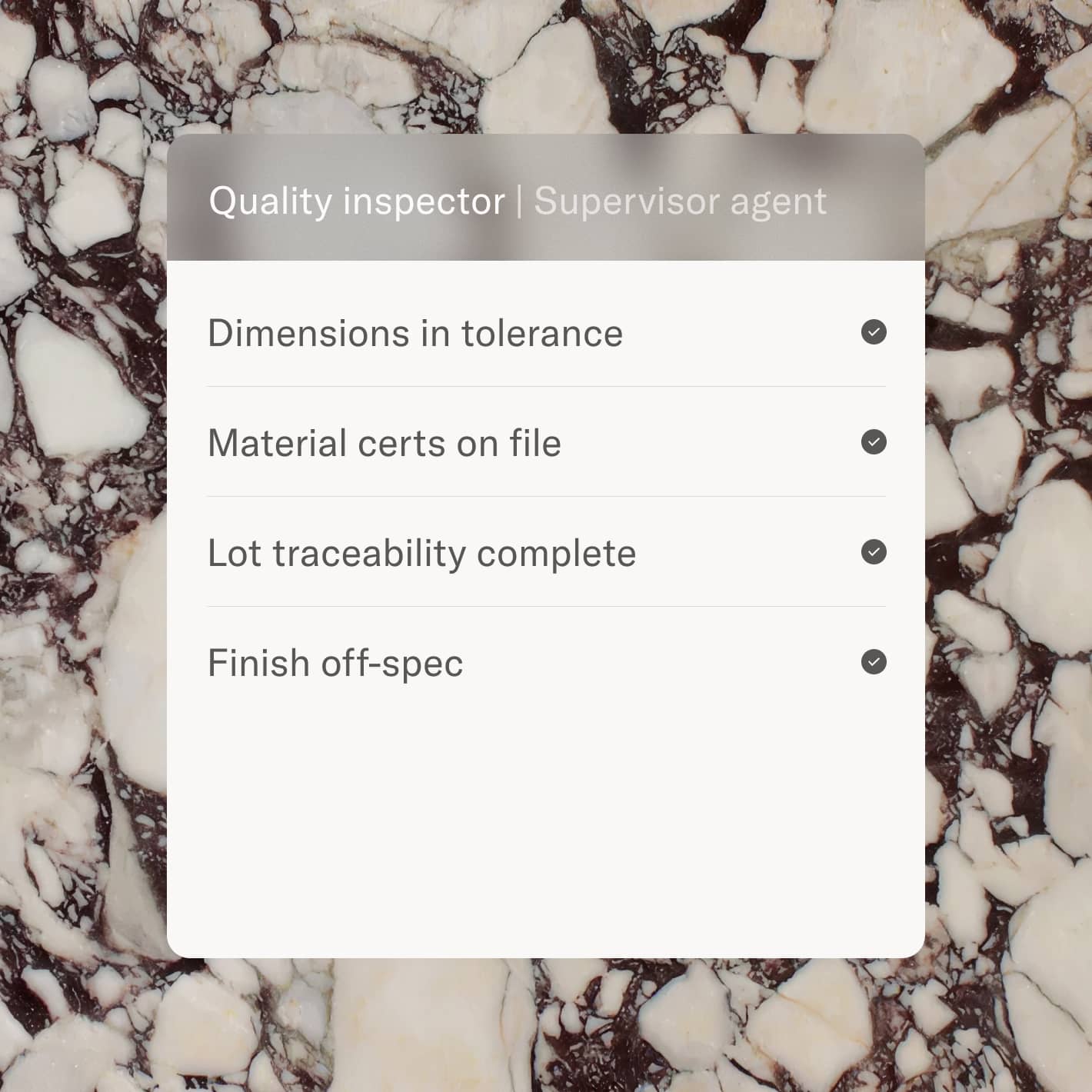
  • Deploy custom AI agents with Agent Foundry. Create agents that know your requirements to gather context, validate submissions, and route exceptions, with supervisor agents escalating to a human when judgment is required.
  • Run committee review and payer enrollment as structured steps. Route reviews with service-level targets and escalation paths, and trigger payer enrollment automatically when credentialing completes so credentialed providers do not sit unbillable.
  • See and ask across every file. Process Pulse reporting shows where each provider stands and where bottlenecks form, with AI summaries flagging steps trending overdue.
  • Prove every decision. A compliance-grade audit log across 65+ action types records who signed off, whether agent or human, when, and with what information, for Joint Commission and NCQA readiness.

Key considerations

  • Not a standalone verification database or PSV engine. Moxo orchestrates the workflow around the one you already use.
  • Built for coordinating multi-party processes, not for running high-volume, system-to-system verification with no human involvement.

Pricing. Free to start. Business plans start at $80/month billed annually. Enterprise pricing on request.

G2 rating: 4.5/5

Best for. Multi-site health systems where the coordination between providers, internal teams, and external parties is the primary bottleneck.

Get started for free and orchestrate your credentialing workflow for healthcare operations.

2. Medallion: Best for API-first automated verification

Medallion is an API-first credentialing and provider-network-management platform built for speed, with automated verification that can complete in days rather than months.

It targets digital health companies, telehealth groups, and payers that credential and enroll providers at volume and want the whole cycle, verification, payer enrollment, licensing, and ongoing monitoring, to run programmatically rather than by hand. Increasingly it layers AI agents over that automation to move more of the routine work off credentialing staff.

Key strengths

  • Automated primary source verification compresses a process that normally takes weeks of phone and fax outreach into days, the single biggest driver of faster time-to-revenue.
  • Continuous license and sanction monitoring catches changes between credentialing cycles, reducing the compliance risk of a lapsed or flagged provider still seeing patients.
  • The API-first design lets digital health companies embed credentialing directly into their own onboarding systems rather than run it as a separate manual process.
  • Integrations with CAQH, the NPDB, and state licensing boards keep verification and provider data current without duplicate entry.
  • Handling licensing and payer enrollment alongside credentialing closes the gaps where providers otherwise sit idle and unbillable.

Key considerations

  • The API-first architecture can require engineering resources that smaller practices do not have, so the full value depends on technical capacity.
  • Pricing is custom and oriented to scale, so it is a heavier, costlier fit for very small groups.
  • The breadth across credentialing, licensing, and enrollment means teams that only need one piece may pay for more platform than they use.

Pricing. Custom (quote-based).

Best for. Fast-growing medical groups and digital health companies credentialing providers at scale.

3. symplr Provider: Best for enterprise health-system credentialing

symplr Provider (formerly Cactus) is a long-established enterprise standard for provider credentialing and privileging, managing the full lifecycle from initial application through reappointment.

It is built for large hospitals and health systems whose medical-staff offices handle complex privileges, committee governance, and accreditation requirements, and it plugs into the broader symplr governance, risk, and compliance suite that many of those systems already run for the rest of their operations.

Key strengths

  • Manages the end-to-end credentialing and privileging lifecycle with depth in committee workflows and medical-staff governance that is unmatched for large, complex hospitals.
  • Tracks OPPE and FPPE for ongoing provider evaluation, supporting the continuous-evaluation requirements enterprise health systems must meet.
  • Built for Joint Commission compliance, with the audit trails, reporting, and accreditation rigor that regulators and surveyors expect.
  • As part of a broader symplr GRC suite, it fits health systems that want to standardize credentialing, compliance, and provider data on one vendor.
  • Long market presence means mature workflows and a large base of experienced medical-staff professionals who already know the system.

Key considerations

  • Enterprise implementation timelines and pricing make it a heavy, resource-intensive lift to deploy.
  • The depth and configurability are overkill for small practices and most mid-size groups.
  • As an established enterprise platform, the interface and workflows can feel less modern than newer cloud-native tools.

Pricing. Custom (enterprise).

Best for. Large health systems with complex privileging and medical-staff requirements.

4. QGenda: Best for credentialing plus provider scheduling

QGenda is a provider-operations platform that combines credentialing with scheduling and workforce management on one system, having added credentialing through its CredentialGenie acquisition.

Its defining idea is that credentialing should not sit in a silo apart from the rest of provider operations, so the same platform that verifies a provider also schedules them and tracks their capacity.

It is aimed at health systems and large groups that want to connect who is credentialed to who is actually on the schedule.

Key strengths

  • Automates PSV, expiration tracking, and payer enrollment, then unifies them with scheduling to close the gap where a provider is scheduled before credentialing clears, or sits credentialed but unscheduled.
  • One platform for credentialing, scheduling, and on-call coverage reduces the number of systems a health system has to buy, run, and integrate.
  • Workforce analytics give operations leaders a connected, real-time view of provider capacity and utilization.
  • The operations-first framing suits organizations optimizing provider throughput, not just compliance.

Key considerations

  • Credentialing depth can trail dedicated credentialing platforms, since the product favors breadth across operations over specialization.
  • The full value comes from adopting the wider scheduling and operations suite, so credentialing alone is a narrower use case.
  • For teams that only need credentialing, the broader platform can be more than they require.

Pricing. Custom (quote-based).

Best for. Organizations that want credentialing integrated with provider scheduling and operations.

5. Modio Health: Best for cloud-native credentialing with a modern experience

Modio Health offers cloud-native credentialing through its OneView platform, pairing a modern interface for staff with a provider-facing mobile app and a free Universal Provider Record for individual clinicians.

It is aimed at mid-size medical groups and health organizations that want real automation and a clean user experience without the weight, cost, or dated interfaces of legacy enterprise systems. The emphasis on provider experience is deliberate: the easier it is for providers to submit and update documents, the faster credentialing moves.

Key strengths

  • Automated PSV and real-time license monitoring run behind a modern, well-designed interface that drives adoption from both credentialing staff and the providers who supply documents, which is often where manual processes stall.
  • The provider-facing mobile app and free Universal Provider Record cut the friction of collecting and keeping documents current.
  • Strong CAQH sync keeps provider profiles current across systems and removes duplicate data entry.
  • Cloud-native delivery means faster setup and updates than on-premise legacy tools.

Key considerations

  • A smaller partner and integration ecosystem than the largest enterprise platforms.
  • Best suited to mid-size groups, so very large, multi-facility health systems may need deeper privileges and governance features.
  • Less specialized in complex medical-staff and committee workflows than enterprise-grade tools like symplr Provider.

Pricing. Custom for organizations (free Universal Provider Record for individual providers).

Best for. Mid-size medical groups that want a modern interface for staff and providers.

6. MedTrainer: Best for credentialing plus compliance training

MedTrainer is a healthcare compliance platform that bundles credentialing with training, policy management, and incident reporting in one system.

Rather than being a credentialing specialist, it is built for organizations that treat credentialing as one strand of a broader compliance program and would rather run all of it, verification, staff training, policies, and safety reporting, from a single vendor. It fits smaller and mid-size healthcare organizations where one team owns the whole compliance picture.

Key strengths

  • Automates verification and expiration tracking, then combines it with compliance training, policy management, and incident reporting to consolidate a fragmented compliance stack into one system and one contract.
  • A strong fit for organizations where the same team owns credentialing and staff compliance, so the work lives in one place.
  • Broad compliance coverage and a document repository suit smaller organizations that cannot afford to staff and integrate multiple point tools.
  • The learning-management and policy modules add value that credentialing-only tools do not offer.

Key considerations

  • Credentialing features are less deep and automated than dedicated credentialing platforms.
  • Payer enrollment support is limited compared with credentialing-first tools.
  • Organizations that need best-in-class credentialing may find the breadth comes at the cost of depth.

Pricing. Custom (quote-based).

Best for. Organizations that want credentialing and compliance training in one platform.

7. Verifiable: Best for AI-native, high-volume credentialing

Verifiable is an API-first, AI-native provider credentialing and network-management platform. Its direct-to-source verification automates the large majority of primary source verification in seconds, and its CredAgent AI agent runs credentialing end to end.

With deep Salesforce-native integration, it is used as credentialing infrastructure by high-volume digital health organizations and payers such as Humana, Lyra Health, and Grow Therapy.

Key strengths

  • Automated direct-to-source verification returns most checks in seconds, and a very high automation rate (the vendor cites 97% automated PSV) compresses verification from weeks to seconds at scale.
  • CredAgent, an autonomous AI credentialing agent, plus API endpoints for programmatic provider-data management suit high-volume digital health credentialing where service-based models break down.
  • Native Salesforce integration fits payers and health organizations already standardized on Salesforce.
  • Near-real-time network monitoring keeps provider data current and audit-ready between cycles.

Key considerations

  • Reviewers report occasional freezing during verification processing and minor usability friction.
  • The API and AI-first orientation favors tech-capable teams over small, manual practices.
  • Scale and automation figures are vendor-stated rather than independently audited.

Pricing. Custom (quote-based).

Best for. Digital health organizations and payers that want AI-native, high-volume credentialing and verification.

8. CredentialMyDoc: Best for small to mid-size practices

CredentialMyDoc is an accessible credentialing and enrollment tool for small to mid-size practices moving off spreadsheets, now part of VerityStream (a HealthStream company).

It is positioned as an entry point into structured credentialing: affordable, quick to learn, and light to implement, without the depth or cost of an enterprise medical-staff platform. It suits practices that have outgrown manual tracking but are not ready for a system like symplr Provider.

Key strengths

  • Semi-automated verification, expiration alerts, and basic payer enrollment cover the core credentialing essentials without a heavy implementation.
  • Affordable and approachable, so it is a realistic first credentialing system for small practices leaving spreadsheets behind.
  • Backing from VerityStream and HealthStream gives it a credible support organization and a path to more advanced HealthStream credentialing products as the practice grows.
  • A low learning curve means staff can adopt it without specialized credentialing expertise.

Key considerations

  • Limited automation compared with larger, verification-first platforms, so more work stays manual.
  • Payer enrollment is basic, so high-volume or complex enrollment needs will outgrow it.
  • Built for smaller practices, so it lacks the privileging and committee depth larger organizations require.

Pricing. Custom (per-provider, quote-based).

Best for. Small to mid-size practices that need structure without enterprise software.

9. Incredable: Best for provider-managed credential portfolios

Incredable (formerly Ready Doc) is a provider-facing credential-management tool that lets clinicians own, maintain, and share a verified credential portfolio with employers.

It inverts the usual model: instead of each organization chasing a provider for the same documents, the provider keeps one current record and shares it. That approach fits locum, travel, and fill-in physicians who credential repeatedly across many facilities, and the organizations that work with them.

Key strengths

  • A provider-owned, portable credential portfolio shifts the document-collection burden off credentialing staff and onto a record the provider maintains once.
  • The portable portfolio is ideal for locum, travel, and fill-in physicians who credential at many facilities in a year.
  • Verified document sharing with employers speeds onboarding each time a provider takes a new assignment.
  • Provider ownership and expiration tracking keep records more current, since the clinician has a direct incentive to maintain them.

Key considerations

  • The provider-managed approach may not fully satisfy a health system's own primary source verification and governance requirements.
  • Less suited to organizations that need to own and control the verification process end to end.
  • Its value is concentrated in contingent and multi-facility staffing rather than fixed, single-employer medical staff.

Pricing. Custom (quote-based).

Best for. Temporary and fill-in physicians, and organizations that want providers to manage their own credentials.

10. CredentialingSpectrum: Best for outsourced credentialing services

CredentialingSpectrum is a credentialing platform that pairs software with optional outsourced credentialing services, handling verification, enrollment, and follow-up on the organization's behalf.

It is aimed at practices that would rather buy credentialing as a service than build and staff an internal function, while still having software visibility into the work. Unusually for this category, it publishes a starting price rather than quoting everything by request.

Key strengths

  • Full-service credentialing and enrollment handled on your behalf removes the need to hire, train, and retain scarce specialized credentialing staff.
  • The managed service suits practices without the provider volume to justify a full-time credentialing team.
  • Per-provider, published pricing scales with actual need and is more transparent than the quote-only norm in this category.
  • Software access alongside the service gives clients visibility into work that a pure outsourcing arrangement would hide.

Key considerations

  • The outsourced model means less internal control and less real-time, hands-on visibility than running credentialing in-house.
  • Dependence on an external team can slow urgent or exception-heavy cases that need immediate attention.
  • Organizations that eventually want to bring credentialing in-house may find the service model harder to transition away from.

Pricing. From $6/provider/month, with custom plans above.

Best for. Organizations that want to outsource credentialing entirely rather than build internal capacity.

Choosing the right credentialing software

Selecting the right platform depends on your organizational scale and specific bottlenecks. While CredentialMyDoc and Incredable serve smaller practices, mid-market and high-volume groups typically opt for Medallion, Verifiable, or Modio Health. Enterprise health systems require the governance depth of symplr Provider or QGenda.

In 2026, automated PSV and integrations are table stakes. The true differentiator is the coordination layer. Moxo excels here by orchestrating the complex back-and-forth between providers, staff, and payers. By applying a sophisticated healthcare workflow automation model, Moxo uses AI to handle routine document validation while empowering your team to focus on high-judgment decisions and risk assessments.

Get started for free and orchestrate your credentialing workflow on Moxo today.

FAQ

How long does credentialing take with software vs without?

Manual credentialing typically takes 90 to 120 days per provider. Automated platforms with PSV and structured workflows can reduce this to 30 to 60 days. The time savings come from automated verification, days instead of weeks of phone and fax outreach, and structured document collection that eliminates the 85% error rate on initial submissions.

What is the difference between credentialing and privileging?

Credentialing verifies that a provider holds valid qualifications such as licenses, certifications, and training. Privileging grants specific clinical permissions (which procedures, which patient populations, which settings) based on that review. Credentialing confirms the provider is qualified, while privileging determines what the provider is authorized to do at a facility. Both are required before a provider can practice.

Can credentialing software handle payer enrollment too?

Some platforms do, including Medallion, symplr Provider, QGenda, Modio Health, and Verifiable. Others focus on credentialing only and require separate payer enrollment management. The gap between credentialing completion and payer enrollment is where revenue leakage occurs, so integrated platforms or orchestration tools that connect the two reduce time-to-billing.

How do I start if my credentialing process is entirely manual?

Document your current process: who collects what, who verifies, who reviews, and who approves. Identify the handoffs that cause the most delays, usually provider document collection and committee scheduling. Then evaluate platforms based on whether they address those coordination gaps, not just whether they automate verification lookups.

Describe your business process. Moxo builds it.
Thank you! Your submission has been received!
Oops! Something went wrong while submitting the form.

Make your business flow

See it in action
_______