7 best revenue forecasting software for accurate pipeline planning

Describe your business process. Moxo builds it.
Thank you! Your submission has been received!
Oops! Something went wrong while submitting the form.

The best revenue forecasting software in 2026 is Clari, Aviso, Forecastio, Gong Forecast, Salesforce Einstein, and HubSpot Sales Hub AI, with Moxo as the execution layer that structures the process feeding them. The right choice comes down to your pipeline complexity and which CRM you already run.

Every one of these tools predicts from the data it receives. So if pipeline inputs arrive late, incomplete, or biased, the AI just predicts the wrong number faster. That is the pattern this guide keeps returning to.

Below, each tool is compared by what it does, what it costs, and where it falls short. Moxo comes first as the execution layer that determines whether any forecast is accurate, followed by the forecasting engines from enterprise platforms to CRM-native options.

TL;DR: Best revenue forecasting software

  1. Moxo: best for AI orchestration across tools, teams and AI agents
  2. Clari: best for enterprise AI forecasting across complex, multi-segment pipelines
  3. Aviso: best for multi-signal forecasting in large sales organizations
  4. Forecastio: best for HubSpot-native forecasting without enterprise cost
  5. Gong Forecast: best for conversation-informed forecasting inside Gong
  6. Salesforce Einstein: best for forecasting inside a Salesforce environment
  7. HubSpot Sales Hub AI: best for forecasting inside a HubSpot stack

How to choose revenue forecasting software

Before comparing tools, diagnose why your forecast breaks. The answer points you to the right tier.

If your forecast breaks because of data quality, fix the data layer first. No sales forecasting software overcomes stale CRM inputs. If reps update the pipeline on Sunday night by copying last week's numbers, Clari and Aviso will produce the same result your spreadsheet did, just with better charts. Start with process design: tie CRM updates to deal execution events so the data reflects reality. Then invest in forecasting software.

If your forecast breaks because of volume and complexity, you need a dedicated platform. Once you manage 500+ opportunities across multiple segments, rep-level rollups, and quarterly board reporting, CRM-native forecasting runs out of depth. Enterprise and mid-market platforms add AI-driven signals, scenario modeling, and segment-level inspection that native tools cannot match.

If your forecast breaks because of coordination, you need an orchestration layer. The forecasting cadence, where reps submit, managers validate, RevOps reconciles, and Finance reviews, is what determines whether the number is real. If that forecasting cadence is improvised through Slack reminders, no software fixes the output.

Revenue forecasting software comparison

Platform Tier Best for Starting price Key limitation
Moxo Execution layer Orchestrating the forecasting operations across teams, systems and AI agents Free, then from $80/mo billed annually Not a forecasting engine, it orchestrates the process
Clari Enterprise AI forecasting and pipeline inspection $100–120/user/mo (est. ~$30K/yr min) Needs a clean process to hit its accuracy claims
Aviso Enterprise Multi-signal AI forecasting for large orgs Custom (est. $50K–85K+/yr) Complex implementation, long ramp to value
Forecastio Mid-market HubSpot-native forecasting and analytics From $249/mo (billed annually) HubSpot-only, no cross-platform support
Gong Forecast Mid-market Conversation-informed deal and forecast prediction ≈$2,100–3,000/user/yr (bundle) Forecasting is secondary to conversation intelligence
Salesforce Einstein CRM-native Pipeline AI inside Salesforce Sales Cloud $175/user/mo + add-on from ~$50/user/mo Limited scenario modeling and segment depth
HubSpot Sales Hub AI CRM-native Forecasting inside the HubSpot stack Included at $90/seat/mo (Professional) Ceiling on complexity for enterprise pipelines

Best revenue forecasting software in 2026

1. Moxo: The execution layer that makes every forecast accurate

Moxo is a human-AI process orchestration layer, not a forecasting engine, and it leads this list for a reason. Every other tool here predicts from the data it receives, and Moxo is what makes that data clean.

It structures the forecasting cadence that produces the inputs: the submission-to-review cycle across Sales, RevOps, and Finance runs as one designed workflow instead of a scramble of spreadsheets and Slack reminders.  

Key strengths

  • Runs the forecasting cadence as one workflow. The full cycle, where reps submit, managers validate, RevOps reconciles, and Finance reviews, runs as a designed process with owners and deadlines rather than a monthly scramble.
  • Cleans the data at the source. Pipeline updates tie to real deal-execution events, so the numbers feeding the forecast reflect what actually happened instead of a Sunday-night copy of last week.
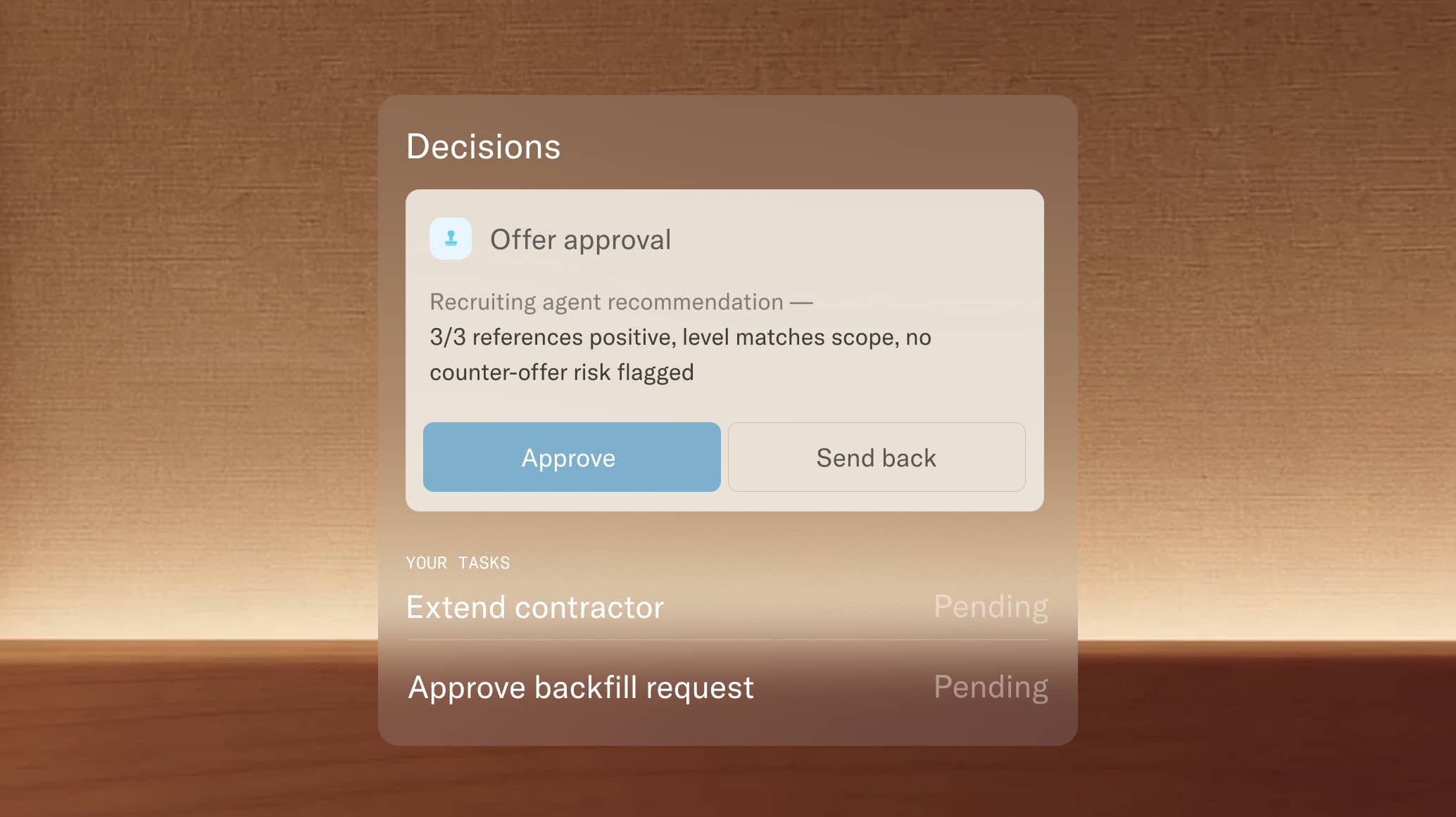
  • Cuts rep update effort with AI agents. One agent pre-fills known deal data so reps touch only what changed, another confirms the required fields are complete before a submission advances, and automatic nudges chase idle updates ahead of the deadline.
  • Keeps a named human accountable for every number. Each review routes to a specific owner with the context already assembled, so managers and Finance validate the forecast rather than rebuild it.
  • Enforces the deadline, not just the reminder. SLAs and escalation move each step on time, so the forecast is ready when the review is, every cycle.
  • Process Pulse reporting. flags the late step or team and tracks forecast accuracy over time, backed by a compliance-grade audit trail of who submitted and approved what.
  • Sits alongside the engine you already run. Moxo feeds clean, timely data into Clari, Salesforce, HubSpot, or your CRM rather than replacing them.

Limitations

  • Not a forecasting engine. It structures the data and the cadence, but you still need a CRM or forecasting tool to generate and model the number.
  • Built for coordinating the process, so a team whose forecast breaks purely on the model, not the inputs, will see less lift.

Pricing: Free to start, then from $80/month billed annually.

G2 rating: 4.5/5

Best for: RevOps leaders whose forecast breaks on coordination between Sales, RevOps, and Finance, not on the forecasting model itself.

Get started for free and build your forecasting cadence on Moxo.

2. Clari: Best for enterprise AI forecasting

Clari is the market leader in AI-driven revenue forecasting, used by large revenue teams to run the quarter from a single source of truth. It combines pipeline inspection, deal-risk scoring, forecast rollups, and revenue-leak detection in one platform, and its models tighten the forecast as the quarter progresses.

Managers submit and commit forecasts inside Clari while RevOps and Finance inspect the same numbers, so the whole org works from one view instead of competing spreadsheets. After completing its merger with Salesloft in December 2025, it now pairs that forecasting with sales engagement across the funnel.

Key strengths

  • Forecasts and rolls up revenue with mature, multi-model AI across the full quarter.
  • Inspects pipeline and scores deal risk down to the segment, team, and rep level.
  • Detects revenue leak and flags deals slipping before the number moves.
  • Supports scenario planning and mutual action plans for large, complex deals.
  • Adds sales engagement across the funnel after the Salesloft merger.

Limitations

  • Accuracy depends entirely on clean, timely inputs. If the forecasting cadence is improvised, Clari inherits the mess.
  • Prices by module with a steep effective annual minimum, so it is out of reach for smaller teams.
  • Takes real implementation time and admin ownership before it reaches full accuracy.

Pricing

$100–120 per user per month, with an estimated annual minimum around $30,000. Quote-based.

Best for: enterprise RevOps teams managing complex pipelines across multiple segments.

3. Aviso: Best for multi-signal forecasting at scale

Aviso is an enterprise forecasting and revenue intelligence platform that predicts the number from many signals at once, weighing CRM data, email engagement, calendar activity, and deal sentiment rather than pipeline stage alone.

Its AI produces rep-level and segment-level forecasts with confidence scores, then layers on scenario planning, win-rate prediction, and guided-selling recommendations. It is built for large, high-volume sales organizations where board-level accuracy matters and the pipeline is too complex for CRM-native tools to model well.

Key strengths

  • Scores forecasts from many signals at once (CRM, email, calendar, deal sentiment), not stage alone.
  • Predicts win rates and models scenarios at the rep and segment level.
  • Surfaces the specific deals moving the forecast, with confidence levels.
  • Offers guided-selling recommendations to steer reps mid-deal.
  • Handles large, high-volume pipelines built for orgs with hundreds of reps.

Limitations

  • Implementation is complex, with roughly 60 to 90 days before meaningful accuracy gains.
  • Pricing is enterprise-only and quote-based, so it is a poor fit for smaller teams.
  • Requires dedicated administration and clean signal sources to sustain accuracy.

Pricing

Custom, estimated $50,000–85,000+ per year. Quote-based.

Best for: enterprise sales orgs with 200+ reps and board-level forecast accountability.

4. Forecastio: Best for HubSpot-native forecasting

Forecastio is a dedicated forecasting and pipeline-analytics tool built natively for HubSpot, aimed at teams that have outgrown HubSpot's built-in forecasting but do not need an enterprise platform. It delivers pipeline coverage analysis, forecast accuracy tracking, quota attainment monitoring, and what-if scenario modeling inside the HubSpot ecosystem.

Because it reads directly from HubSpot data, it goes live in minutes and costs a fraction of enterprise tools while still adding real forecasting depth.

Key strengths

  • Forecasts with AI and time-series models tuned to HubSpot data, live in minutes.
  • Analyzes pipeline coverage, deal velocity, and rep performance against quota.
  • Tracks forecast accuracy over time with a full audit trail.
  • Models what-if scenarios and goal attainment for the current period.
  • Costs a fraction of enterprise platforms while delivering real forecasting depth.

Limitations

  • Works only with HubSpot, so Salesforce or Dynamics teams cannot use it.
  • Covers forecasting only, with no cross-functional coordination or FP&A modeling.
  • Complements rather than replaces a broader RevOps stack.

Pricing

From $249/month billed annually (2 seats). The Pipeline Intelligence tier is $369/month.

Best for: HubSpot-native RevOps teams that need dedicated forecasting without enterprise pricing.

5. Gong Forecast: Best for conversation-informed forecasting

Gong Forecast extends Gong's conversation intelligence into deal prediction and forecast management. Instead of relying on the CRM stage alone, it reads the signals in what buyers actually say on calls and in emails to score deal health and predict outcomes, often catching risks the pipeline does not show.

For teams already running Gong for call recording and coaching, it adds forecasting in the same platform, right alongside the conversation data managers already review.

Key strengths

  • Scores deal with health from what buyers actually say on calls, not just CRM stage.
  • Flags pipeline risk early when conversation signals contradict the pipeline.
  • Rolls up forecasts alongside the call data reps and managers already review.
  • Surfaces coaching insights next to the forecast so managers act on both at once.
  • Keeps forecasting and conversation intelligence in one tool for Gong users.

Limitations

  • Forecasting is a feature within Gong, not the core product, so scenario modeling and segment depth trail dedicated platforms.
  • Real cost climbs once the mandatory platform fee is added on top of per-seat pricing.
  • Value depends on already running Gong for conversation intelligence.

Pricing

Quote-based. The bundle runs roughly $2,100–3,000 per user per year (Foundations, plus the Forecast add-on and a platform fee).

Best for: teams already using Gong that want forecasting in the same platform.

6. Salesforce Einstein: Best for forecasting inside Salesforce

Salesforce Einstein Forecasting adds AI-driven predictions, opportunity scoring, pipeline inspection, and forecast rollups inside the Salesforce environment. It runs on the CRM data reps already maintain, so Salesforce-heavy orgs get AI forecasting without adopting a separate system or adding another vendor.

It suits teams that want to sharpen forecast accuracy inside Salesforce, though it trades the depth of dedicated platforms for that convenience.

Key strengths

  • Predicts deals and scores opportunities inside the Salesforce environment.
  • Rolls up forecasts by category with pipeline trending and change tracking.
  • Runs on the data reps already maintain, with no separate system to adopt.
  • Adds no new vendor or integration for Salesforce-heavy orgs.
  • Inherits Salesforce reporting, permissions, and customization.

Limitations

  • Scenario modeling and segment-level depth trail dedicated forecasting platforms.
  • Forecasting AI is a paid add-on, not included in the base Sales Cloud edition.
  • Accuracy depends on disciplined CRM hygiene, which the tool does not enforce.

Pricing

Sales Cloud Enterprise from $175/user/month. Einstein predictive forecasting is a paid add-on from about $50/user/month (estimate), not included in the base edition.

Best for: Salesforce-heavy organizations that want sales forecast accuracy without adding another vendor.

7. HubSpot Sales Hub AI: Best for forecasting inside HubSpot

HubSpot Sales Hub AI includes forecasting, deal scoring, and pipeline analytics inside the integrated HubSpot stack, with no separate forecasting tool to buy.

It reads the CRM data marketing and sales already shared and surfaces pipeline health dashboards, AI deal predictions, and goal tracking from the Professional tier up. It fits mid-market teams that run HubSpot as their primary CRM and want capable forecasting built in rather than bolted on.

Key strengths

  • Forecasts and prioritizes deals inside the HubSpot stack at no extra cost from Professional up.
  • Shows pipeline health dashboards, deal scoring, and goal tracking in one view.
  • Runs on the CRM data marketing and sales already share.
  • Adds no extra vendor for HubSpot-first teams.
  • Stays easy for admins to configure without developers.

Limitations

  • Enterprise complexity and multi-segment rollups push past what native forecasting supports.
  • Depth on scenario modeling and accuracy analysis trails dedicated platforms.
  • Tied to the HubSpot ecosystem, with no cross-CRM option.

Pricing

Included at the Professional tier, $90/seat/month billed annually, and above.

Best for: mid-market teams using HubSpot as their primary CRM and marketing platform.

Which is best for your business?

Revenue forecast tools have never been more capable. Enterprise platforms use multi-signal AI, mid-market tools deliver real accuracy at accessible price points, and CRM-native options mean you may already have forecasting and not be using it. Match the tier to why your forecast breaks, and the shortlist gets short fast.

But the most consistent pattern across every tier is a process gap, not a software gap. The tool predicts from whatever arrives. The process determines whether what arrives is real. The best forecasting software predicts from clean data. The best forecasting process is what makes the data clean.

Moxo gives RevOps teams the orchestration layer to structure the forecasting cadence every tool here depends on, the same approach behind broader business process optimization and process automation. It connects the steps between reps, managers, RevOps, and Finance into one designed process, so the data feeding your forecasting software reflects what is happening in your pipeline.

Get started for free and structure your forecasting cadence on Moxo today.

FAQ

Do I need dedicated forecasting software if my CRM already has forecasting?

It depends on pipeline complexity. If you manage fewer than 200 opportunities across a single segment, CRM-native forecasting is likely sufficient. Once you are running multi-segment rollups, board-level scenarios, or rep-level accuracy tracking, dedicated revenue forecast tools add depth that native options cannot match.

Why is my forecasting software not improving accuracy?

Almost always because the process feeding the software is broken. Sales forecasting software predicts from whatever data it receives. If reps update the CRM inconsistently, stage definitions are subjective, and the cadence between Sales, RevOps, and Finance is improvised, no AI model overcomes those inputs.

How much does revenue forecasting software cost?

Enterprise platforms like Clari and Aviso run from roughly $30,000 to $85,000+ per year. Mid-market tools range from $249/month (Forecastio) to about $3,000 per user per year for Gong's bundle plus platform fees. CRM-native forecasting is built into HubSpot's Professional tier ($90/seat/month) and available as a Salesforce Einstein add-on (from about $50/user/month on top of Sales Cloud).

What is the difference between revenue forecasting software and FP&A tools?

Revenue forecasting software (Clari, Gong, Forecastio) predicts pipeline outcomes using deal-level signals: engagement, stage progression, and conversation data. FP&A tools (Anaplan, Pigment, Workday Adaptive Planning) model broader financial scenarios: revenue, expenses, headcount, and cash flow. RevOps teams typically need both, pipeline forecasting software for the sales number and FP&A for the company-wide plan.

Describe your business process. Moxo builds it.
Thank you! Your submission has been received!
Oops! Something went wrong while submitting the form.