The PDSA cycle is a continuous improvement method for testing small changes, studying the results, and deciding whether to adopt, adapt, or abandon each one. It helps teams improve processes through structured experimentation instead of large, risky changes.
For operations teams, PDSA works best when the moving parts stay visible. Improvement ideas, tasks, evidence, approvals, feedback, and follow-up actions all need to be tracked in a clear workflow, or the learning from one cycle fades before the next begins.
This guide covers what the PDSA cycle means, the four steps, a worked example, when to use it, its benefits and common mistakes, a reusable template, and how to run improvement cycles inside your workflows.
Key takeaways
PDSA stands for Plan-Do-Study-Act. It is a repeatable cycle for testing a change on a small scale and refining it before you commit fully.
Each cycle tests one change at a time. You predict a result, study what actually happens, then decide whether to adopt, adapt, or abandon the change.
PDSA and PDCA differ mainly in emphasis. Study focuses on learning from results, while Check focuses on verifying a change against a standard.
The method works best inside live workflows. When cycle time, completion rates, and exceptions are measured as work happens, each cycle produces evidence you can trust.
What Is the PDSA cycle?
The PDSA cycle is a four-step method for testing a change on a small scale, learning from the result, and deciding what to do next. The steps run in a loop, so you finish one pass and start the next with what you learned.
What Does PDSA stand for?
PDSA stands for Plan, Do, Study, Act. Each step has a clear job:
Plan. Identify the problem and design the test.
Do. Run the test on a small scale.
Study. Review the results and compare outcomes against what you expected.
Act. Adopt, adapt, or abandon the change.
The method traces back to Walter Shewhart's work on statistical quality control in the 1930s and to W. Edwards Deming, who popularized a version often called the Deming wheel. The Institute for Healthcare Improvement later adopted Plan-Do-Study-Act as the testing engine inside its Model for Improvement, now used widely across healthcare and beyond.
What makes the cycle useful is its restraint. Instead of redesigning an entire process and hoping it lands, you test a single change against a clear prediction, keep what works, and drop what does not. That habit of small, evidence-based steps is the foundation of most continuous improvement work. As an improvement methodology, it sits alongside other process improvement methodologies like Lean and Six Sigma rather than replacing them, and it usually lives under the broader umbrella of business process optimization.
PDSA vs. PDCA: Key differences
PDSA and PDCA describe the same basic loop, and the debate over PDSA vs PDCA comes down to one word. The PDCA cycle uses Check as its third step, which leans toward verifying that a change met a defined standard. PDSA uses Study, which leans toward understanding why the results turned out the way they did, including the surprises.
In practice, the PDCA cycle is common in manufacturing, ISO quality systems, and compliance-heavy settings where conformance matters most. PDSA tends to fit environments focused on learning and adaptation, such as healthcare quality improvement. Neither is wrong. The right choice depends on whether your priority is confirming a result or learning from it.
The 4 steps of the PDSA cycle
A clean PDSA cycle asks for more discipline than the four words suggest. Here is what each step involves in practice.
Plan. Define the change you want to test and predict what will happen. Note the specific tweak, who it affects, the data you will collect, and the result you expect. A strong plan also names the problem you are solving, which is where a quick root cause analysis pays off, so you fix the real issue rather than a symptom.
Do. Run the change on a deliberately small scale: one team, one shift, a handful of cases. Keep the test contained so a poor result costs little, and record what actually happens, including anything that did not go to plan.
Study. Compare the results against your prediction. Did the change move the number you cared about, or create a new bottleneck elsewhere? This is the step teams most often rush, and the one that separates real improvement from busywork.
Act. Decide what to do with what you learned: adopt the change and standardize it, adapt it and run another cycle, or abandon it and try something else. Most improvements come from a series of linked PDSA cycles, sometimes called a PDSA ramp, where each pass builds on the last.
PDSA cycle in action
The PDSA cycle shows up wherever teams want to improve a process without gambling on a full overhaul, and that caution is well founded. McKinsey's research on large-scale transformations found that fewer than one in three succeed at both improving performance and holding on to those gains. Small, tested changes are how you stay out of that statistic.
Take a customer support team trying to reduce response delays.
A single PDSA cycle might look like this:
Plan. Test an automated task-routing workflow for high-priority requests, predicting it will cut first-response time without increasing missed tasks.
Do. Apply the new routing to one support queue for two weeks.
Study. Compare response time, missed tasks, and customer follow-ups against the previous two weeks.
Act. If response time improves, expand the workflow to more queues. If not, adjust the routing rules and run another cycle.
That example shows why a PDSA cycle is only as good as the workflow it runs in. When routing, tracking, and follow-up live in one structured process, the Study step has clean data instead of a scramble of emails and spreadsheets.
The same pattern applies elsewhere. A hospital unit tests a new discharge step with one nurse on one ward before spreading it. A manufacturing line trials a changeover on one machine per shift, which pairs naturally with lean process improvement. A finance team pilots an invoice-approval change on one client account first.
Related read: Implementing workflow analysis in healthcare to optimize clinical efficiency
When to use the PDSA cycle
Reach for the PDSA cycle whenever a change carries enough uncertainty that you would rather test it than assume it works. Common situations include:
Testing process changes and piloting new procedures. Any time a new way of working is unproven, a small cycle tells you whether it holds before you commit.
Improving workflows and internal operations. Use it to refine handoffs, routing, and approvals without disrupting the whole team.
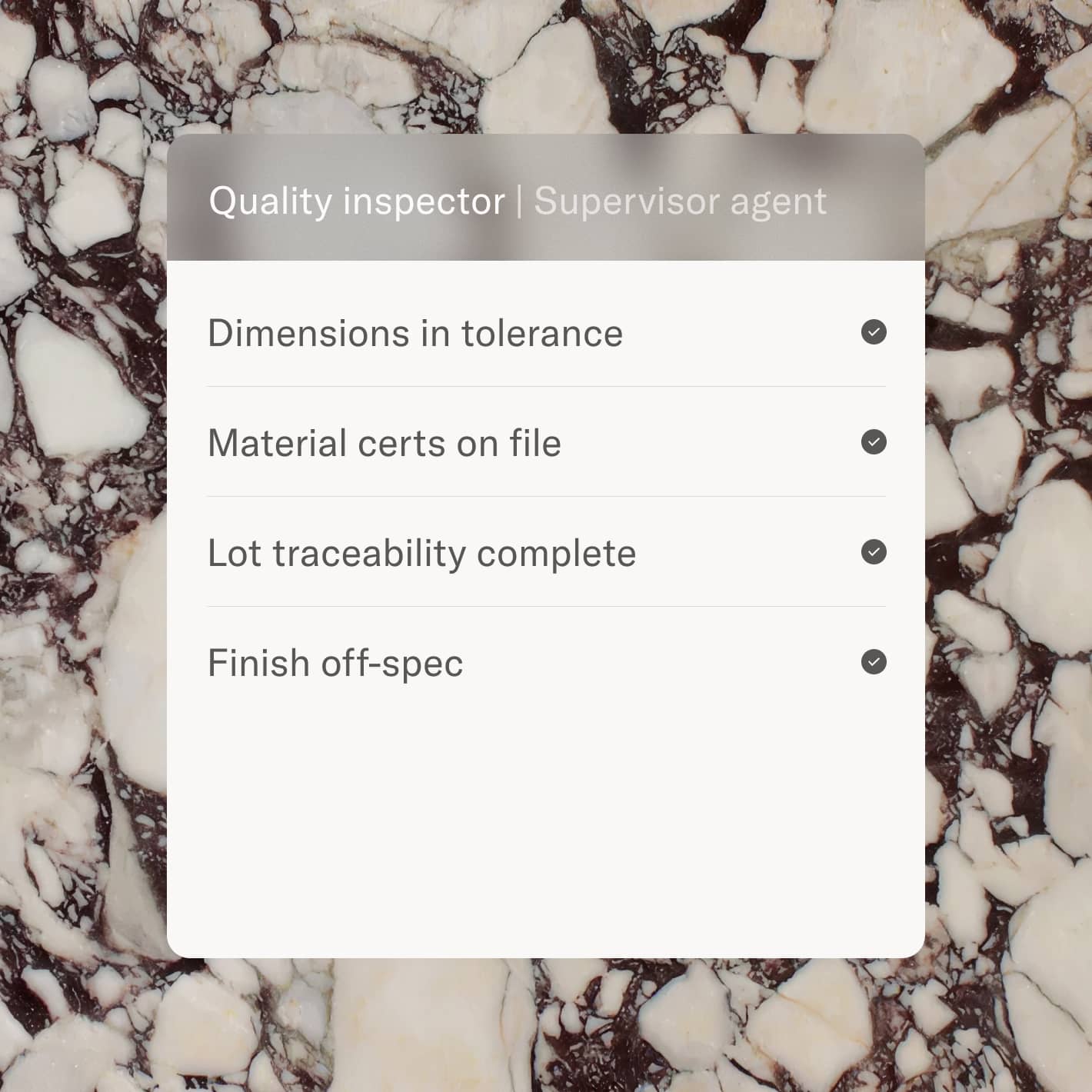
Reducing errors and improving quality. Test one fix at a time so you can see which change actually moves your quality metrics.
Testing automation before you scale it. Trial a new workflow automation on a narrow slice of cases to confirm it behaves before a wider rollout.
Improving healthcare quality. The setting PDSA was popularized for, from medication safety to patient wait times.
Improving customer onboarding. Test changes to a customer onboarding workflow on one segment before applying them to every new client.
Refining compliance workflows. Trial changes to a compliance workflow where evidence and audit trails matter, then standardize what passes.
Benefits of the PDSA cycle
PDSA makes change manageable. The main benefits:
It supports small-scale testing. You learn from a contained test instead of betting the whole process on an untested idea.
It reduces implementation risk. A change that fails on one queue or ward costs little and teaches a lot.
It encourages evidence-based decisions. Each cycle produces data, so you adopt changes because they worked, not because they sounded good.
It helps teams learn quickly. Short, frequent cycles turn improvement into a steady rhythm.
It improves quality and is easier to manage. Incremental, reversible changes are simpler to roll out and roll back than a full redesign.
It builds a habit of continuous improvement. One cycle feeds the next, so progress compounds.
It documents what changed and why. A clear record of each cycle keeps decisions auditable.
Common PDSA pitfalls you need to know about
Most PDSA failures come from shortcuts, not the method. Watch for these:
Testing too many changes at once. When several run together, you cannot tell which one caused the result.
Skipping the Study phase. Rushing from Do to rollout throws away the learning the cycle exists to produce.
Not defining success metrics up front. Without a metric set during Plan, Study becomes a matter of opinion.
Running the test too broadly. A test across the whole team is no longer low-risk, and a bad result is expensive.
Failing to document findings. Undocumented cycles get repeated and their lessons lost.
Not assigning clear owners. A cycle with no owner stalls and rarely reaches Act.
Treating PDSA as a one-time project. The value comes from repeating the loop, not running it once.
Not turning learnings into workflow changes. A validated improvement only pays off when it is built into how the work runs.
PDSA cycle template
A simple PDSA cycle template keeps every cycle consistent and easy to review.
Copy the fields below for each test you run:
Keeping this PDSA cycle template in a shared workflow, rather than a one-off document, lets each completed cycle feed the next.
Embedding PDSA into your workflows
A PDSA cycle only helps if it runs against real work. When improvement lives in a slide deck, the learning fades before the next cycle starts. When it lives inside the workflow, every change you test generates data automatically, which is what makes ongoing workflow optimization possible.
Embedding the cycle means three things. First, run each test inside the actual process so the Do step reflects real conditions. Second, capture the metrics that tell you whether the change worked, which usually means tracking a few clear process improvement KPIs like cycle time, completion rate, and exception volume. Third, make it easy to standardize a winning change and roll back a losing one, so the Act step is a configuration decision rather than a change-management project.
This is where the discipline of process orchestration matters. When your processes are modeled as structured workflows rather than scattered across email and spreadsheets, running a controlled test on a subset of cases and measuring the outcome becomes routine, turning workflow optimization into something your team does continuously.
Related read: How continuous improvement, operational excellence, and optimization actually differ.
Continuous improvement with Moxo
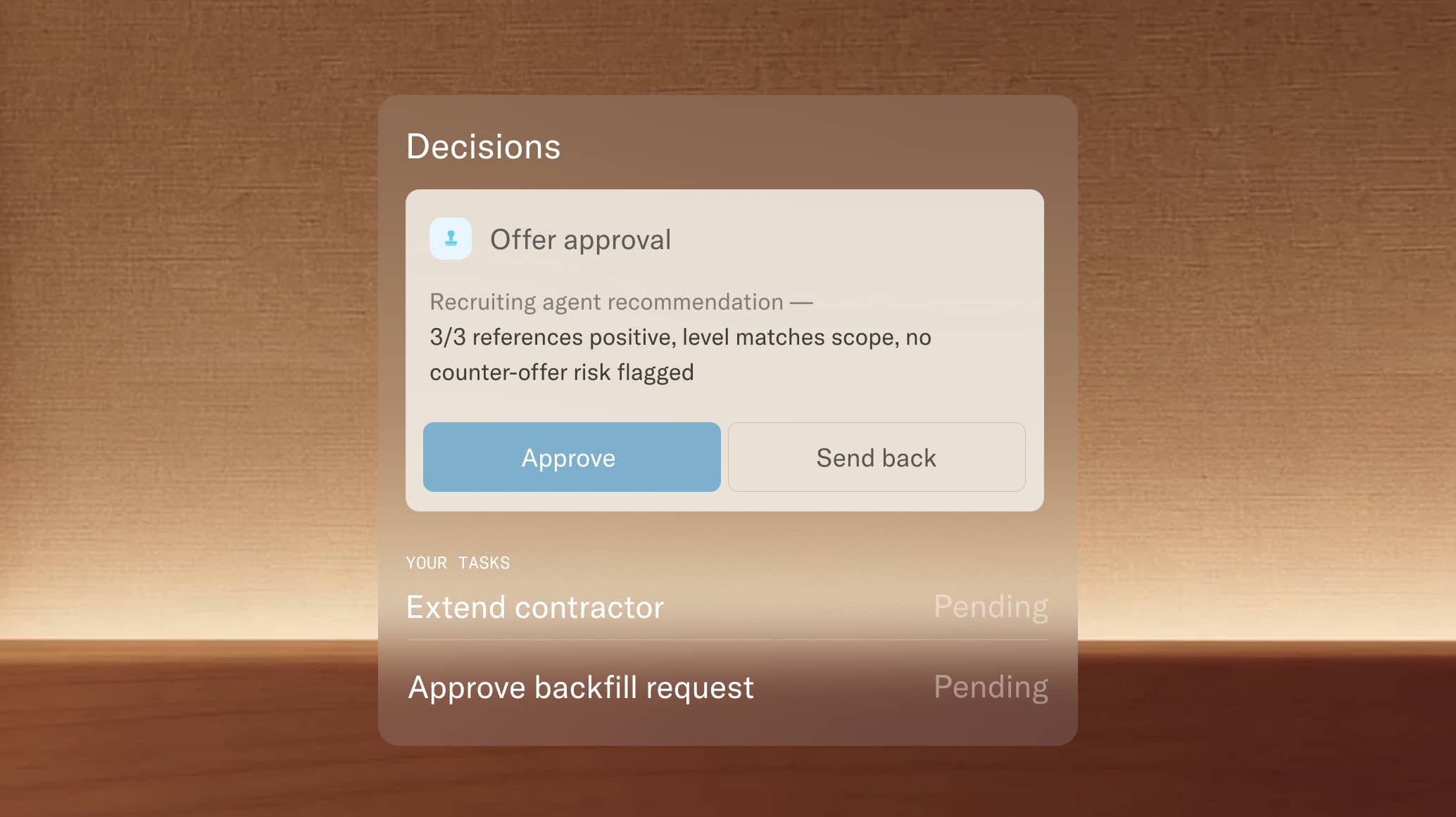
Moxo helps teams turn continuous improvement methods like PDSA into structured workflows. As an improvement cycle moves from planning to testing to implementation, you can assign tasks, collect feedback, route approvals, manage documents, track progress, document decisions, and keep an audit trail, all in one place.
When you plan a change, the AI Flow Assistant turns a plain-language description into a working flow, so setting up a small test takes minutes rather than a rebuild. Role-based assignment and scheduling let you run that test on a single team or a batch of cases, which keeps the Do step small-scale.
As the test runs, Process Pulse reporting tracks cycle time, completion rates, and bottlenecks automatically, while a compliance-grade audit log records every action. You study results against your prediction using live evidence instead of chasing status updates.
When a change proves itself, version history and conversational editing let you standardize it across the flow and roll it back safely if a later cycle disappoints. AI agents handle routing and validation while your team keeps the judgment calls, the human-in-the-loop balance that keeps improvement grounded. You can see the pattern in a continuous improvement flow built in Moxo.
Your process, built and running in Moxo. Get started for free.
Why improvement belongs inside your workflow
The PDSA cycle endures because it respects how change actually works. Small tests, honest study, and a clear decision to adopt, adapt, or abandon beat any wholesale overhaul that no one can measure. Whether you use Plan-Do-Study-Act or the PDCA cycle, the value comes from repeating the loop until a change proves itself.
The hard part is keeping that discipline alive once the early enthusiasm fades. That is easier when improvement runs inside your workflows, where results are measured as work happens. Moxo gives operations teams that infrastructure, pairing AI-driven coordination with human decisions so each cycle produces evidence you can act on.
If you want to see what running an improvement cycle looks like inside a live workflow, get started for free.
Frequently asked questions
What is the PDSA cycle?
The PDSA cycle is a four-step method for improving a process: Plan a change, Do it on a small scale, Study the results, and Act on what you learned. It is a core continuous improvement cycle used to test changes safely before rolling them out widely.
What are the key differences between PDSA vs. PDCA?
Both follow the same loop. The PDCA cycle uses Check as its third step, emphasizing verification against a standard, while PDSA uses Study, emphasizing learning from results. PDCA is common in manufacturing and ISO settings; PDSA is common in healthcare and quality improvement.
How to use the PDSA cycle?
Pick one change and predict its effect; run it on a small scale; compare the actual results to your prediction; then decide whether to adopt, adapt, or abandon it. Repeat the cycle, building on each pass, until the change reliably improves the process.
What are some examples of the PDSA cycle?
Common examples include a support team testing automated routing on one queue, a hospital testing a new discharge step on one ward, and a finance team piloting an invoice-approval change on a single account before applying it across the process.
What to include in a PDSA template?
A useful PDSA cycle template captures the problem, goal, hypothesis, metric, and owner up front, then records what you planned, did, studied, and decided, plus the next cycle to run. Consistent fields make each cycle easy to compare and build on.